

Choosing the Right Semrush Trial offer (14 days):
- Semrush Pro – Choose this if your focus is strictly SEO.
- Semrush Guru – Go with this if SEO + consistent content is your strategy.
- Semrush One – Best if you’re investing in SEO + AI visibility long-term.
Think of it as a business decision, not an emotional reaction. Choose based on the value each plan brings to your long-term strategy.
Semrush offers multiple 14-day trials for different toolkits.
They look similar on the surface, but each package is built for different marketing and growth stages.
14 days go by quickly in the fast-paced world of marketing. And while most users waste trial time exploring dashboards, remember that you’re making a business decision.
It’s about assessing which toolkit gets the results you want — without any bloat that only increases monthly fees.
The goal is to validate ROI before committing to a paid subscription.
Semrush Trials: Quick Comparison
Semrush Pro
- Best For: Solo bloggers, website owners, and professionals
- Complexity Level: Essential features, easy to learn
- What to Validate in 14 Days: Depth of keyword clusters and competitor analysis data — Through site audits, traffic, and domain analysis.
- Our Verdict: The obvious choice for solo bloggers, freelancers, and business owners.
Semrush Guru
- Best For: Fast-growing bloggers and marketing teams
- Complexity Level: Expanded, small teams that require content optimization
- What to Validate in 14 Days: Historical data usefulness and content toolkit performance (plus backlink analytics).
- Our Verdict: Sweet spot for growing brands not yet ready to embrace AI.
Semrush One
- Best For: Full-service agencies and in-house marketing teams
- Complexity Level: Advanced and AI-focused for collaborative teams
- What to Validate in 14 Days: SEO and AI visibility tracking through in-depth keyword research and competitor analysis.
- Our Verdict: Great for brands looking to future-proof their online visibility.
Semrush Pro Trial (14 Days)
Best For:
- Solo bloggers and freelancers
- Early-stage website owners
- SEO validation
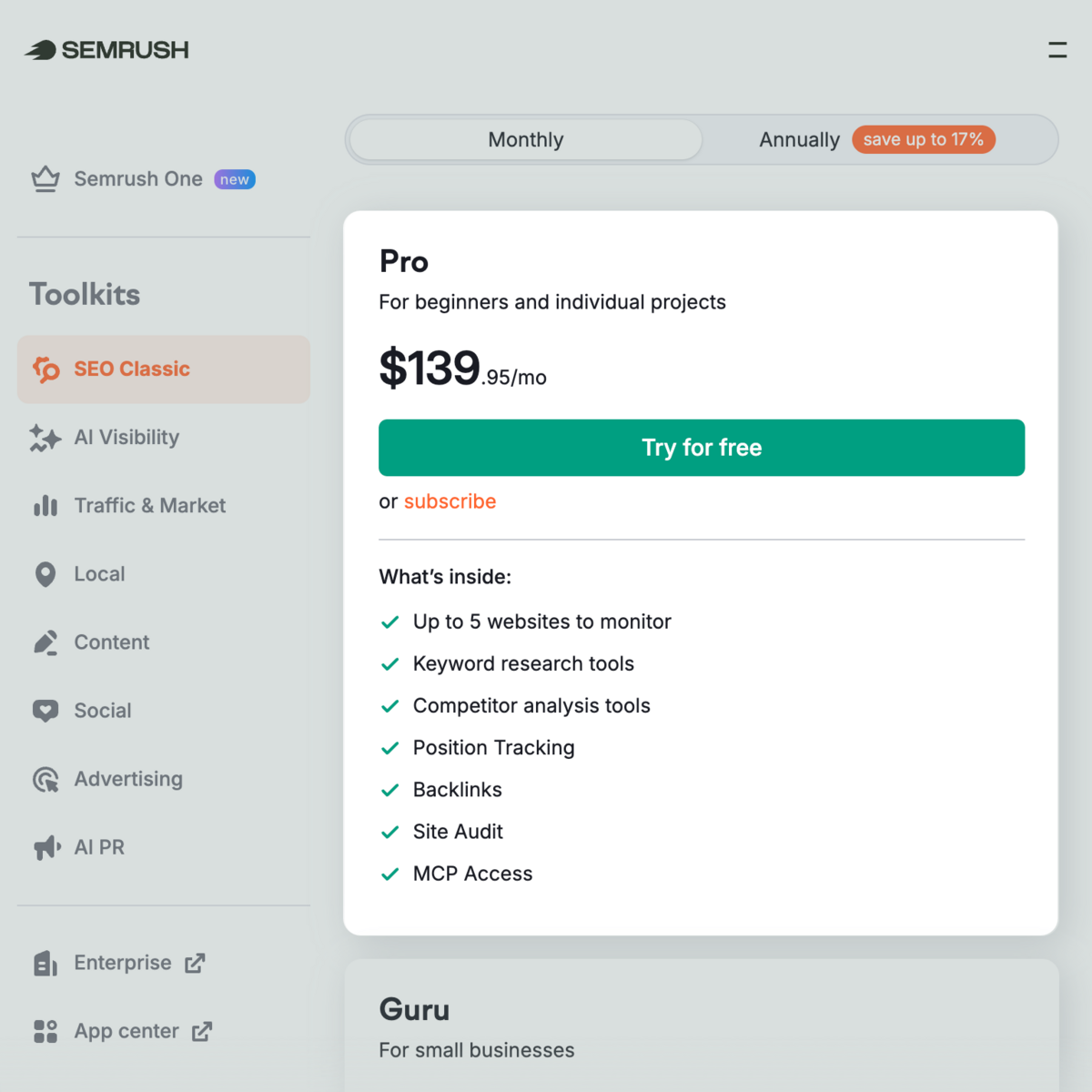
Semrush Pro is considered an “SEO Classic” plan.
It sticks to the original Semrush pricing model. This includes essential features that will help bloggers, freelancers, and solopreneurs run successful SEO campaigns.
What You Can Realistically Achieve in 14 Days
- Validate 2-3 keyword clusters
- Analyze your top 3-5 competitors
- Run a full site audit
- Verify the traffic potential of keywords and topics
- Decide whether SEO is a profitable long-term strategy
Start by researching 2-3 keyword clusters.
These are groups of semantically related keywords that drive wide-range coverage and exposure to a single page.
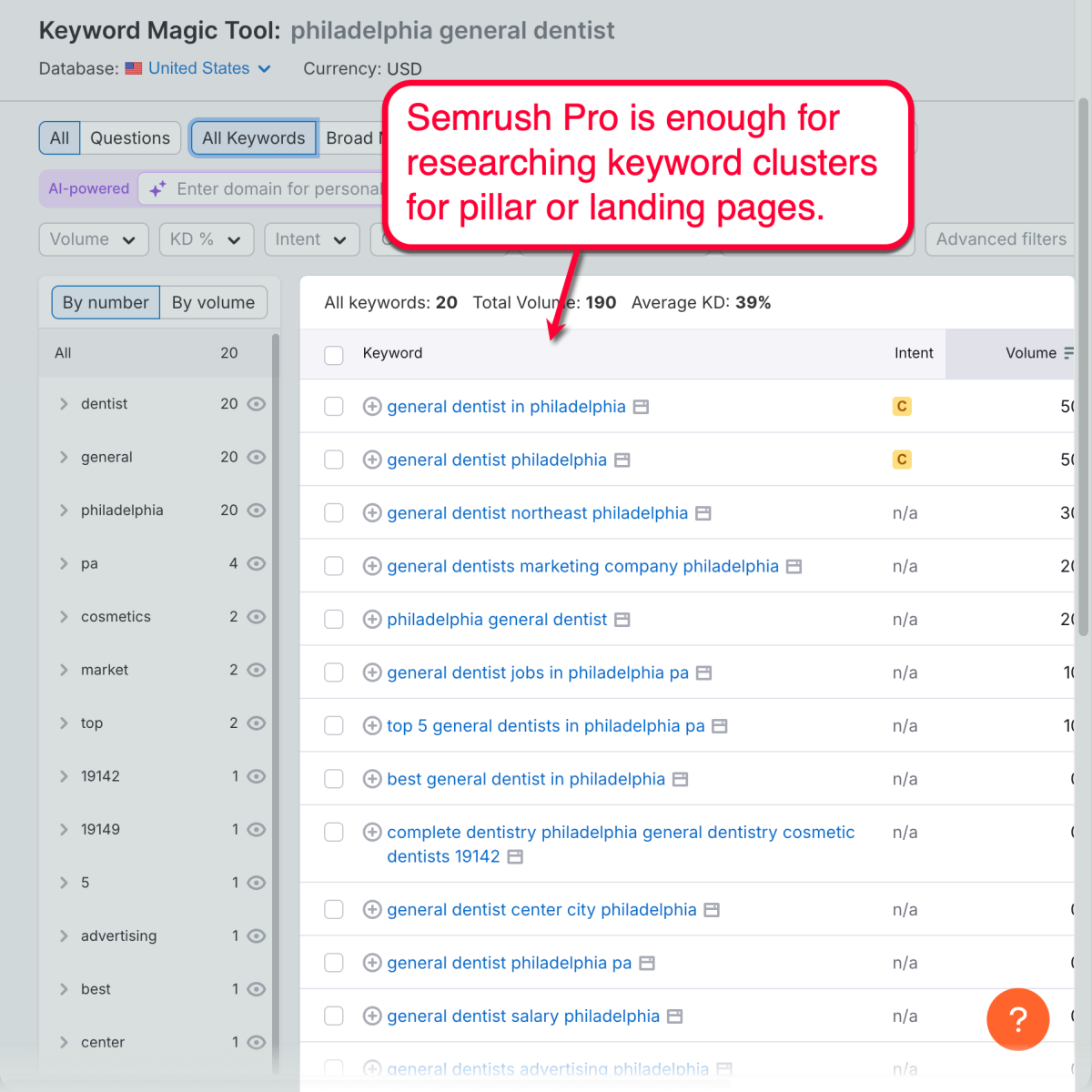
This is useful to startups and small businesses when creating foundational content, like their service landing pages.
Just remember to pick keywords or topics based on business impact — not purely on metrics like search volume or keyword difficulty. Consider how it will contribute to your goals, be it by influencing your audience’s decision-making or directly leading to sales.
Semrush Pro trial also lets you run a complete audit of your website, as well as analyze competitors.
Use these tactics to figure out what generates real results in your niche and what to avoid.
Who Should Avoid It
- Full-service digital marketing agencies
- Teams managing more than five websites
- Businesses requiring historical data
Semrush Pro is the ideal version if you’re still validating SEO as a viable growth channel.
It gives you just enough data to make a confident decision without overwhelming you with enterprise-level features.
Semrush Guru Trial (14 Days)
Best For:
- Fast-growing blogs
- Content production and marketing teams (managing more than 5 clients)
- Businesses that frequently publish SEO content
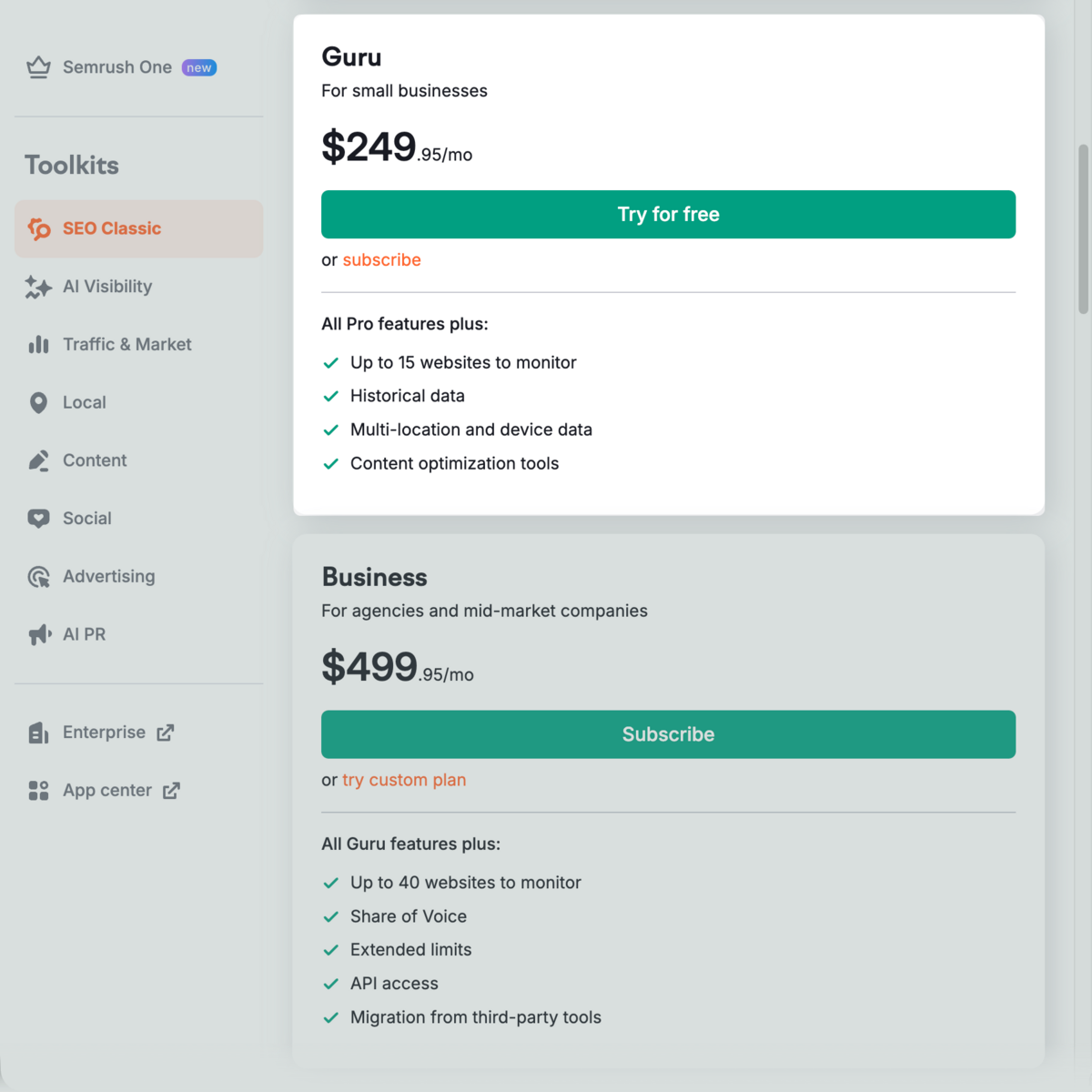
As another SEO Classic plan, Semrush Guru is just like Semrush Pro — but with higher limits and more advanced features.
It provides deeper analytics, historical insights, and content optimization tools for business owners, bloggers, and professionals who publish content at scale.
What You Can Realistically Achieve in 14 Days
- Build a keyword strategy for the next month
- Plan topic clusters
- Perform in-depth competitor analysis
- Analyze your website’s historical performance
- Run a backlink analysis (your own or a competitor’s website)
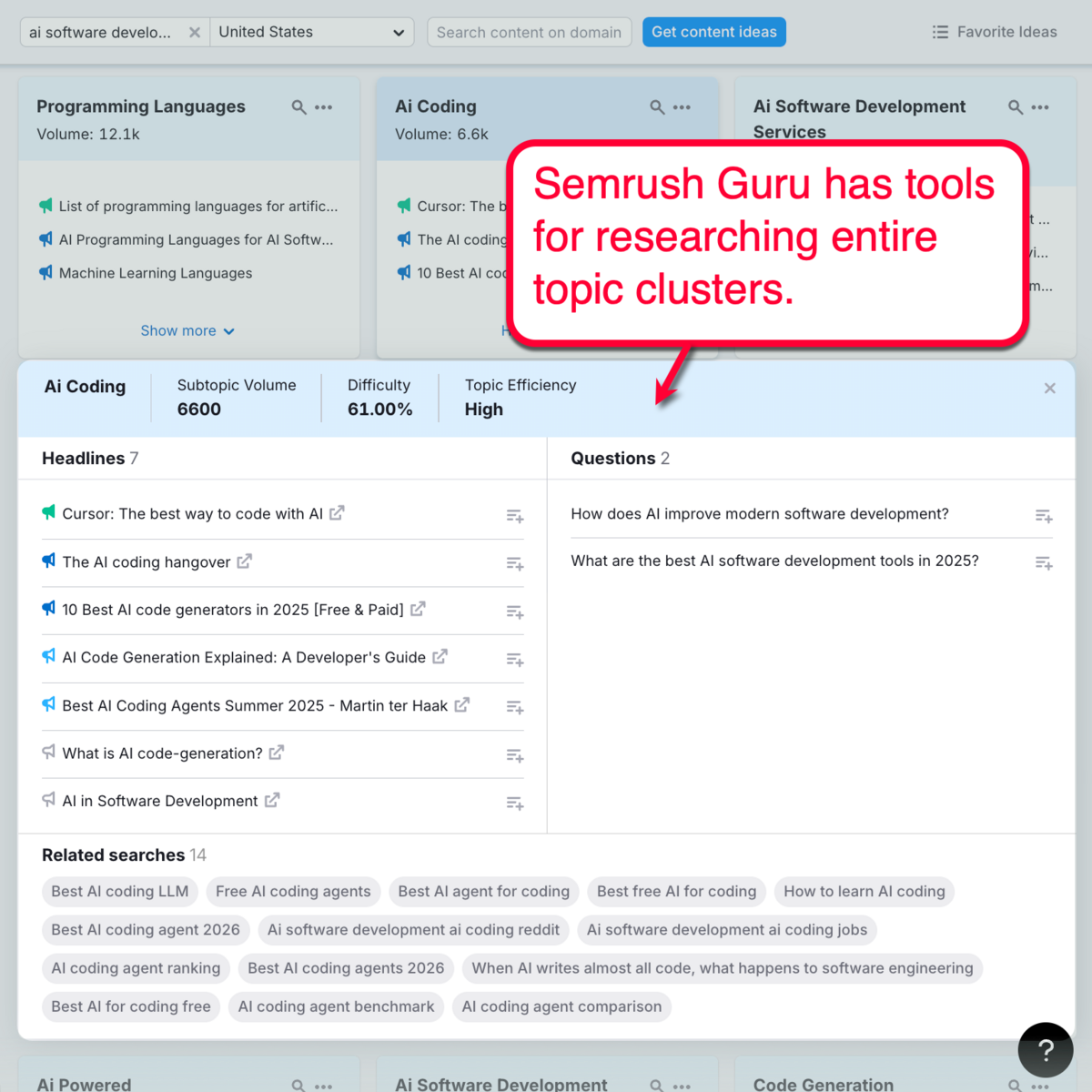
Semrush Guru’s content marketing tools let you plan and execute an entire topic cluster strategy.
Think of a topic cluster as a web of related posts about relevant subtopics. With a pillar page or main topic at the center, these posts are connected via internal links.
That’s how you build topical authority and ramp up your search presence.
You can’t do this with just Semrush Pro’s keyword research and competitor analysis tools.
Semrush Guru also grants access to historical data.
Understand what went right (or wrong), analyze trend shifts, and use your findings to optimize posts. This provides opportunities to make data-driven decisions that lead to steady, reliable progress for fast-growing businesses and teams.
Who Should Avoid It
- Solo bloggers and freelancers
- Startups or small businesses on limited budgets
- Solopreneurs
While Semrush Guru is definitely a step up from Semrush Pro, it’s overkill for users with limited SEO or content marketing needs. But it is a necessary upgrade if you have bigger requirements and need to maintain momentum.
Semrush One Trial (14 Days)
Best For:
- Full-service digital marketing agencies
- In-house marketing teams
- Businesses that run multi-channel campaigns (i.e., AI visibility)
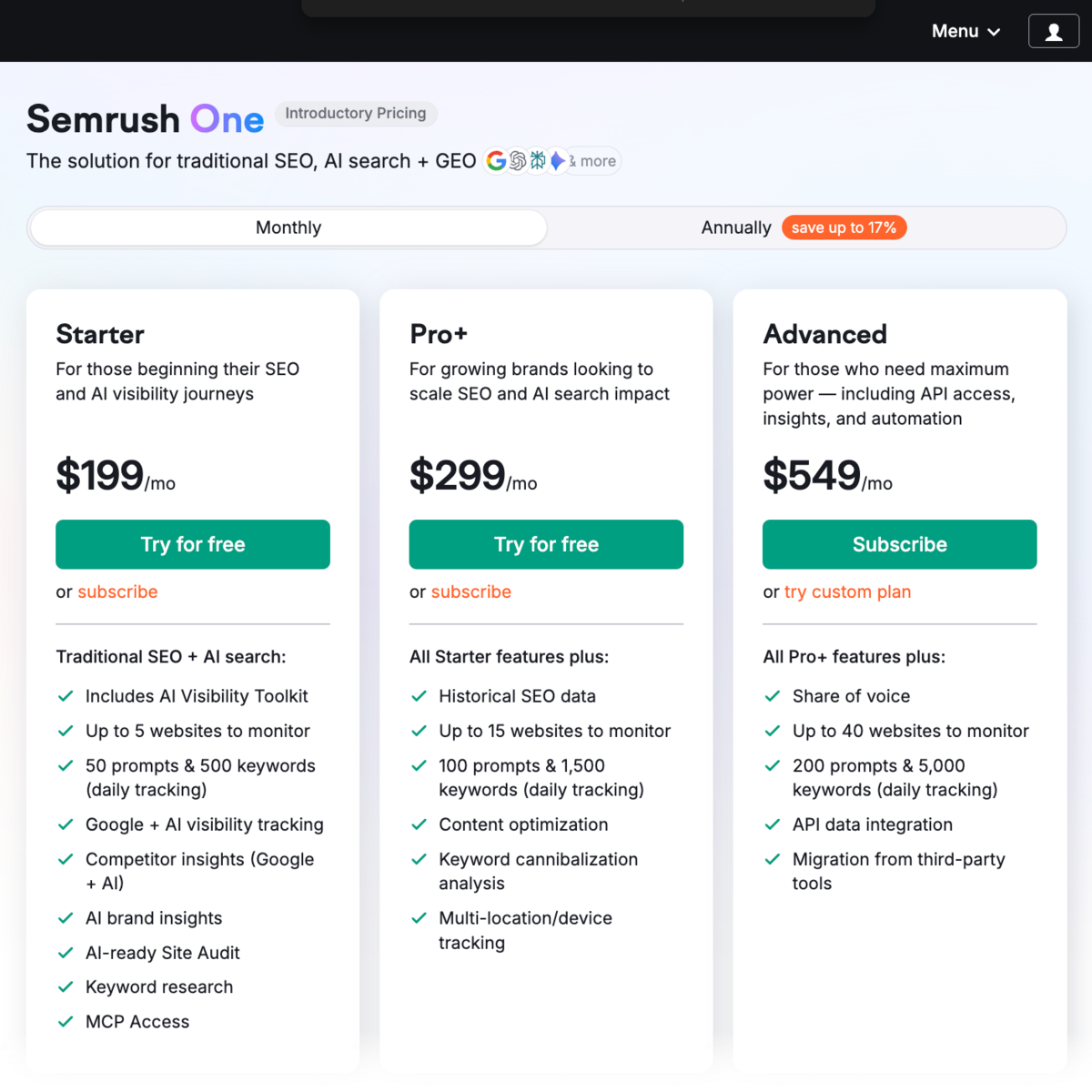
Semrush One follows the new Toolkit-based logic for modern marketing and visibility management.
It’s not just about SEO at this point, it’s also about Generative Engine Optimization (GEO).
What You Can Realistically Achieve in 14 Days
- Perform keyword research
- Analyze competitor performance
- Track and evaluate your AI brand mentions
- Find potential topics that lead to more AI mentions
- Identify websites where AI scrapes information from
The Semrush One trial gives you enough time to conduct an initial visibility report.
This doesn’t stop at organic rankings.
It also analyzes and tracks your brand’s visibility in AI tools, including AI Overviews, ChatGPT, and Google Gemini.
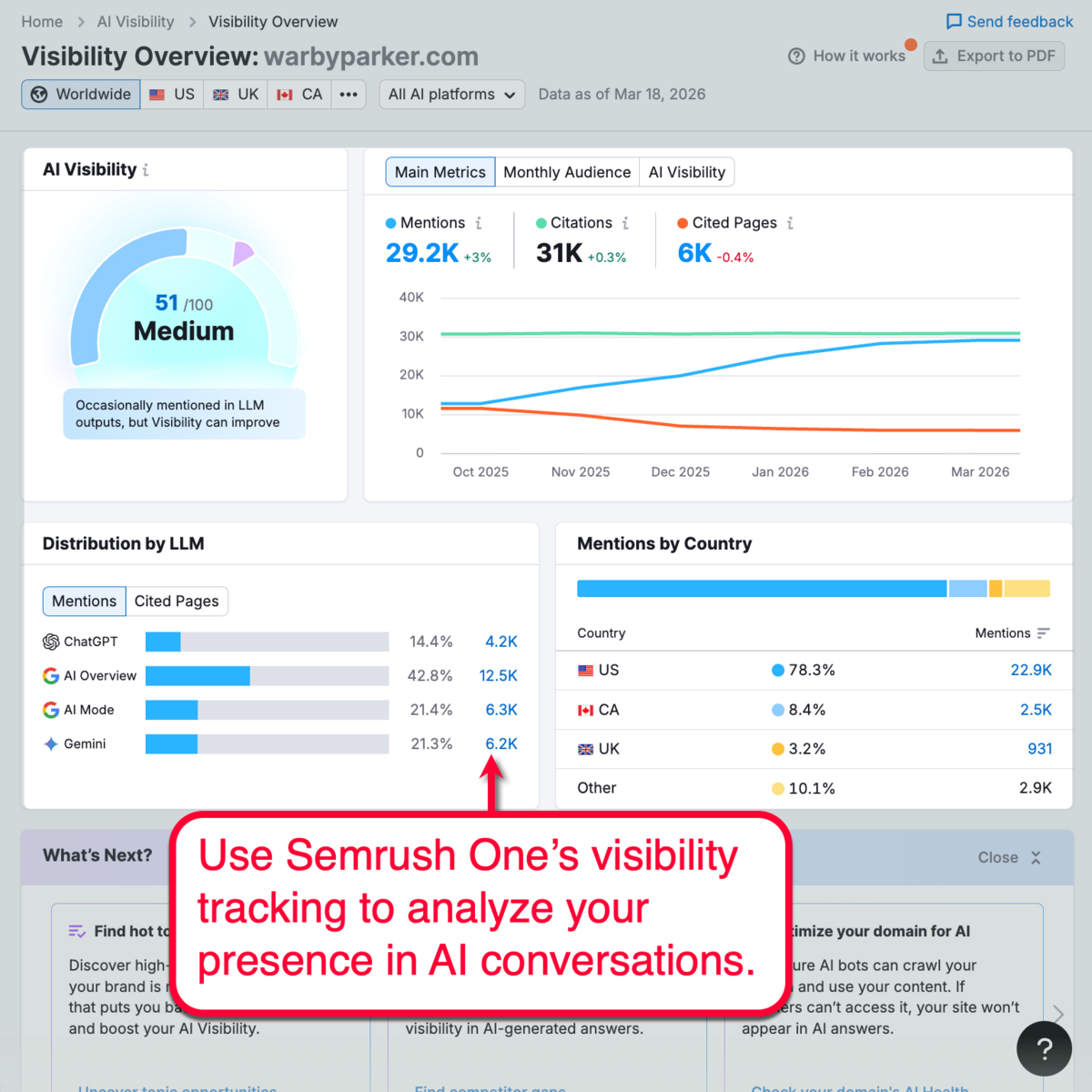
This report identifies your AI mentions and potential topics. You’ll also find “sources” where AI gets information from — AKA, sites that can spread the word on your brand.
All this is done in minutes.
Meanwhile, you still have plenty of time left to do keyword research, site audits, and competitor benchmarking.
If you care about SEO but also need GEO, Semrush One is the perfect replacement for SEO Classic plans.
Who Should Avoid It
- Startups and small businesses (especially local)
- Solo bloggers and freelancers
- SEO-only marketing teams and agencies
What Most People Get Wrong During a 14-Day Trial
A polished UI is indeed important and helps you get productive right away. But once you learn the ropes, the question becomes: “Will it get results?”
Beyond that, avoid the following mistakes when assessing a 14-day trial:
- Starting without a keyword strategy: Even if it’s a trial, use an in-depth keyword strategy to reap the full benefits of other features (i.e., AI Article Generator and Topic Finder).
- Trying every feature without focusing on outcomes: Start at the end and build a 14-day plan that prioritizes specific goals.
- Not exporting data before the trial expiration: Should you decide not to move forward with your Semrush subscription, export all your data (e.g., keywords, competitor data, and backlinks).
- Upgrading emotionally rather than strategically: Always think in terms of ROI when investing in a Semrush plan.
14-Day Action Plan (How to Maximize Your 14-Day Semrush Trial)
Here’s a simple, day-by-day plan for maximizing your Semrush trial:
Day 1-2: Competitor Analysis
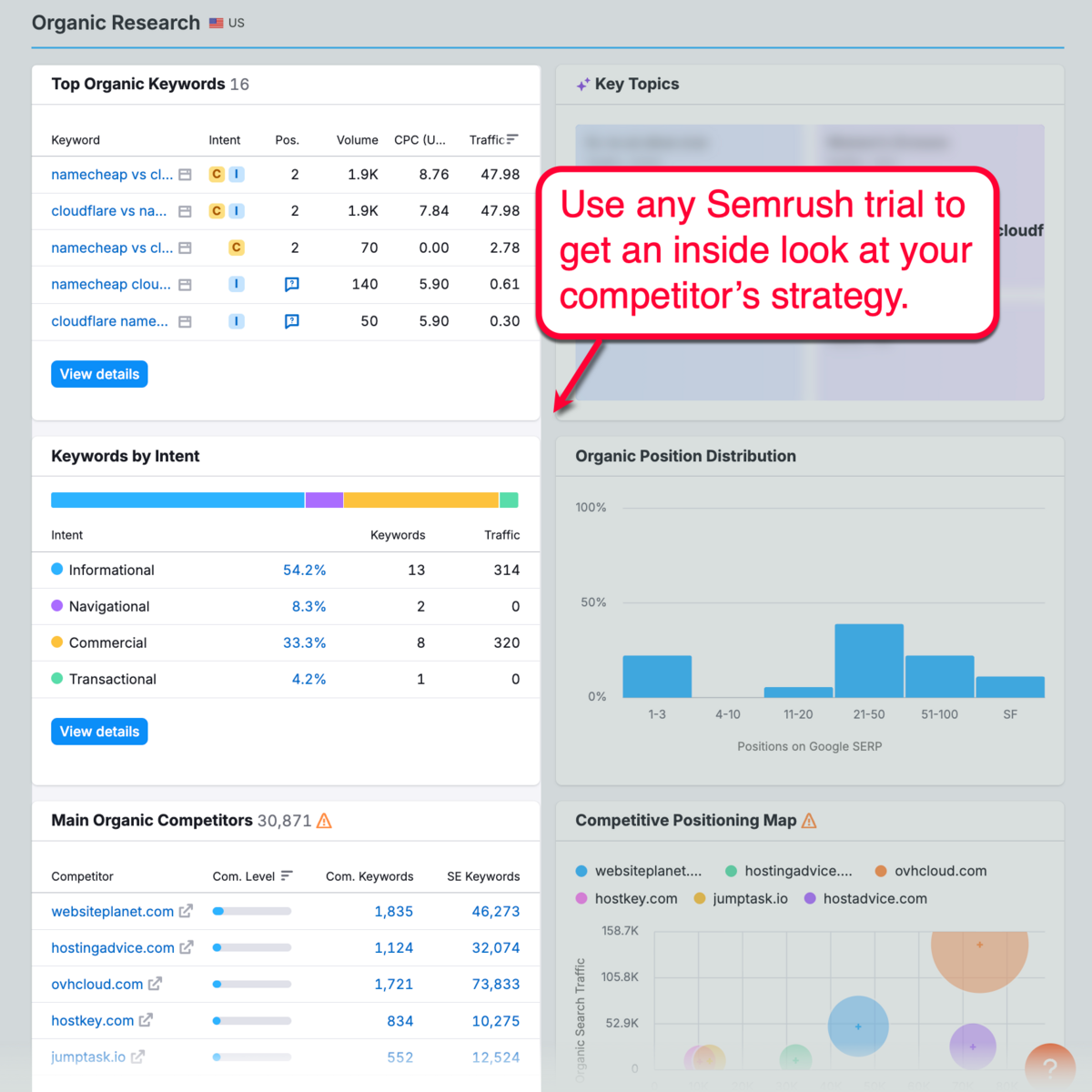
Take advantage of your trial’s competitive research tools to uncover which keywords, topics, AI queries, and backlink sources drive results for other businesses.
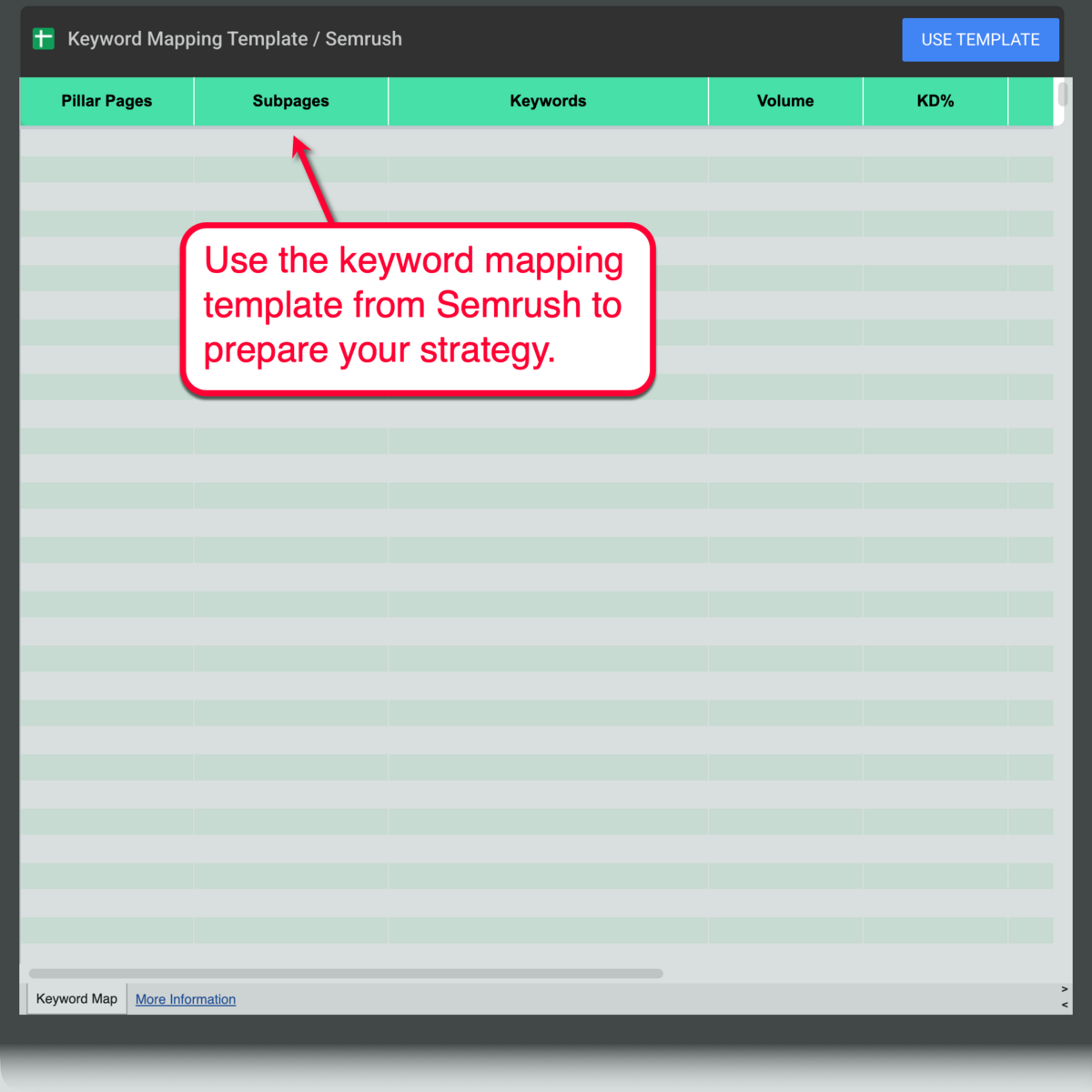
Day 3-4: Keyword Mapping
Any Semrush trial version comes with competitor analysis and keyword research tools you can use for initial planning.
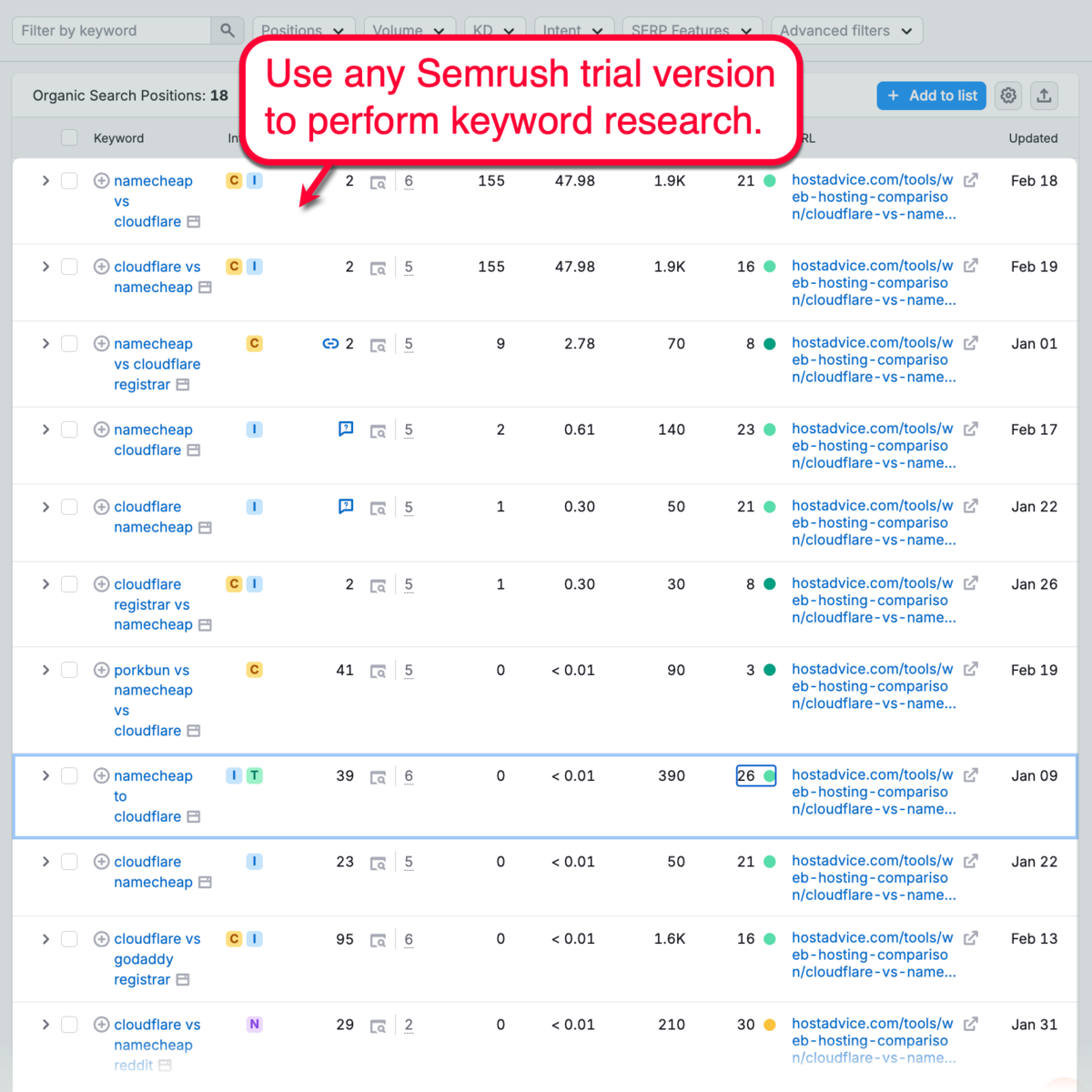
Tip: If you chose Semrush One, use the AI Visibility report to reveal topics and queries that will lead to mentions.
Use this keyword map template (provided by Semrush) and fill in the details. This helps set the stage for your ongoing content and SEO efforts.
Day 5-7: Content Planning
Using your keyword map, create content ideas or topics that you’ll publish within a week.
Using the AI Brief Generator, turn keywords into ready-to-use outlines within minutes. Or, use the AI Article Generator to instantly produce rough drafts you can build on.
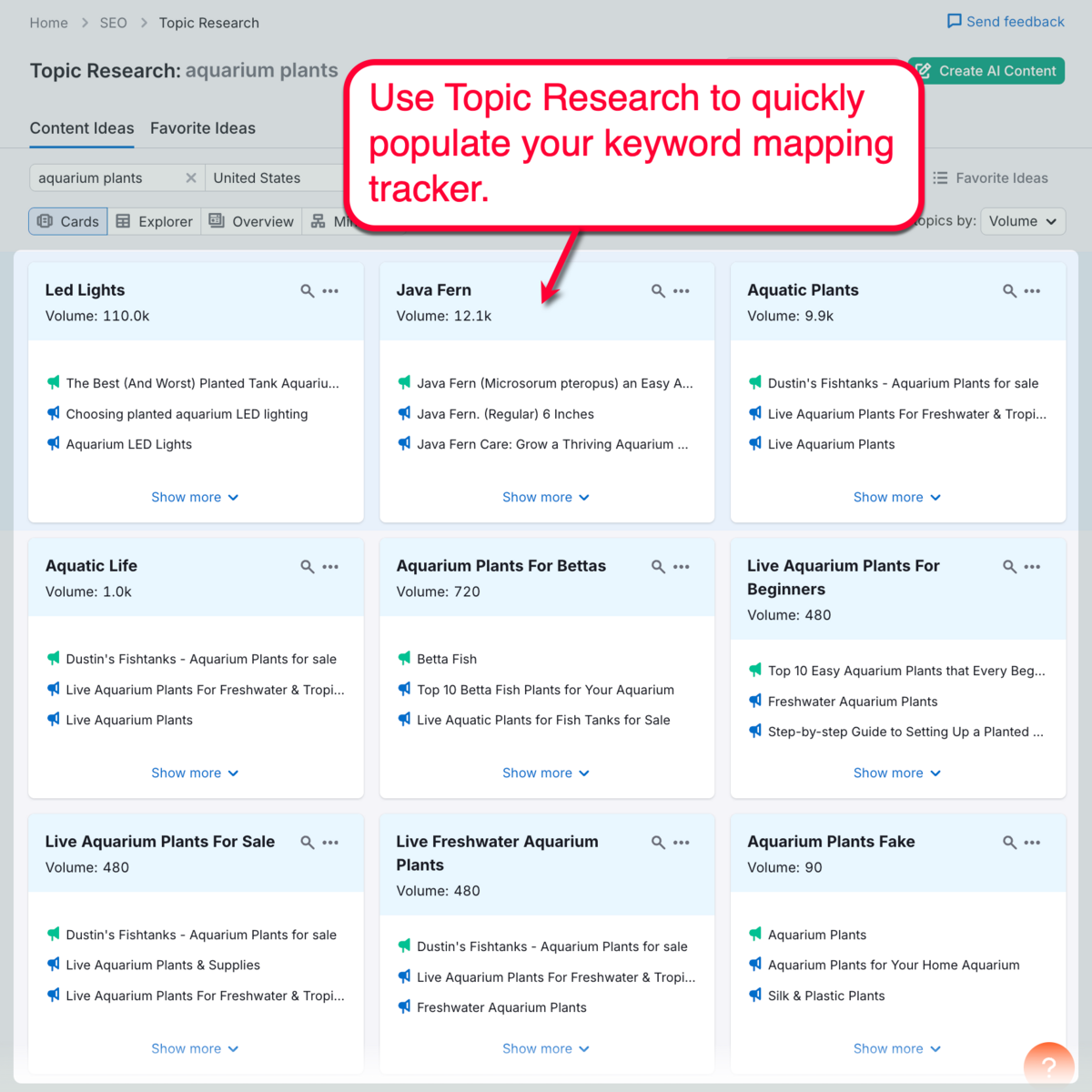
Semrush Guru users can also convert keywords into topic ideas using the Topic Research tool.
Use these features to fill up your keyword mapping sheet in no time.
Day 8-10: Optimization
If you have Semrush Guru, use AI-powered tools to analyze your drafts and obtain optimization recommendations.
This includes:
- Keyword suggestions
- Content improvements based on top results
- Readability and clarity enhancements
Speed things up further with the built-in AI for instant rewrites and text generation.
Day 11-12: Technical Audit
Cap things off with a full site audit to discover more optimization opportunities.
Every Semrush trial version includes the Site Audit tool, which covers every aspect of your website’s performance.
For example, it scans your website for fixable issues like broken links, duplicate title tags, and crawlability issues.
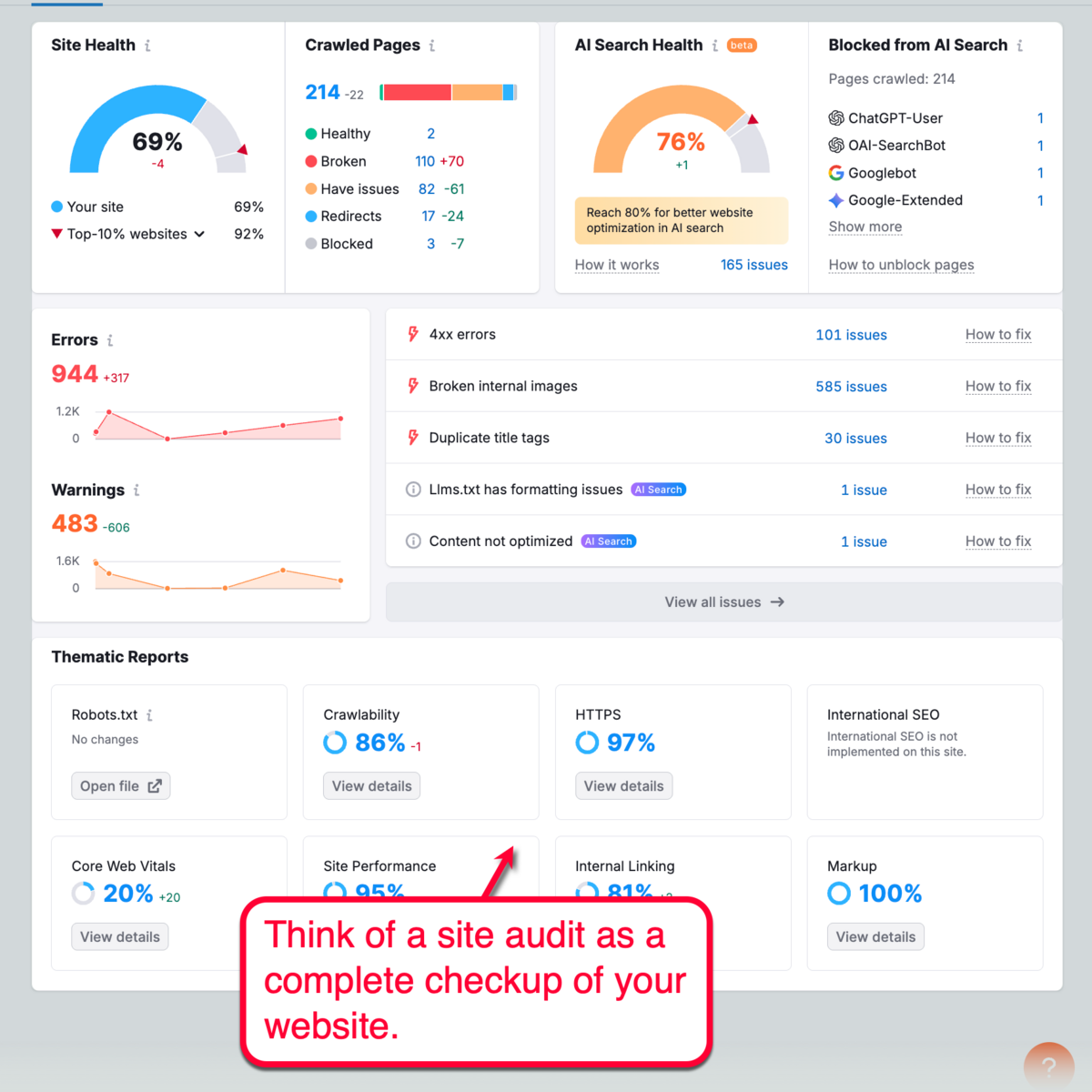
Refer to the site audit results to find ways to improve your website down the line. While you’re at it, use the position tracking utility to monitor your progress.
Day 13-14: Export Reports + ROI Evaluation
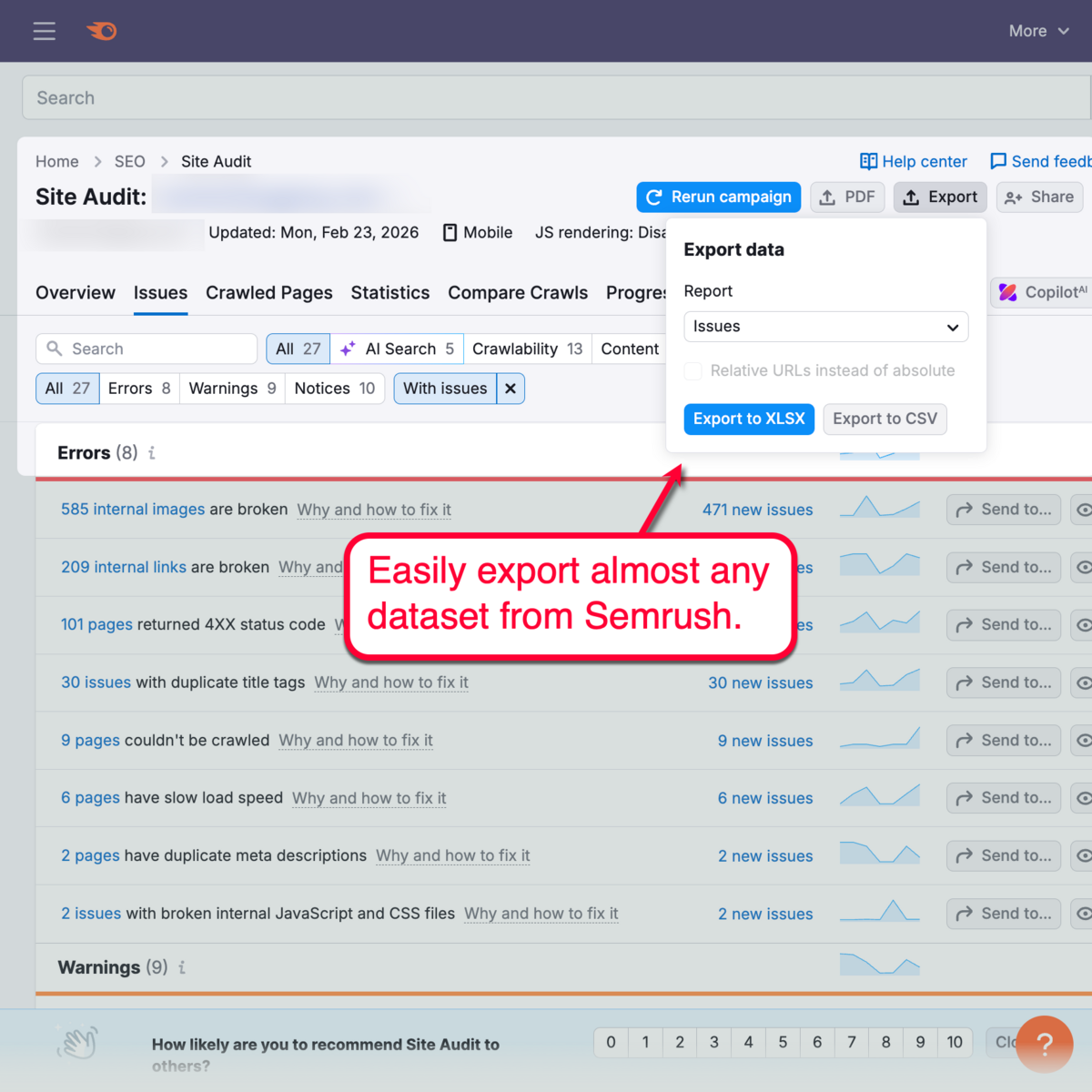
Whether you choose to pay for a subscription or not, exporting reports regularly is always a good idea.
Easily convert any dataset, from website issues to keyword lists, into a PDF or CSV. This lets you save actionable insights regardless of whether you renew or not.
All Semrush plans also come with the visual report builder. Use this to compile datasets from different tools into one cohesive document.
Most importantly, at this point, you need to evaluate Semrush’s potential ROI for your business.
Let’s face it, it’s only 14 days.
You won’t be able to accurately correlate your progress with Semrush with future profits.
What you can do is evaluate the impact of using Semrush on business goals. If it can help you find profitable ranking or GEO opportunities, you’ll be able to gauge whether the subscription cost is worth it.
Tip: Read this guide on how to decide if a topic is worth writing about.
Which Semrush Trial Should You Start With?
Start with Semrush Pro if you’re getting into SEO and want clarity without complexity.
Choose Semrush Guru if content is already part of your growth engine and you want to scale it with data.
Go with Semrush One if you’re thinking beyond SEO and want visibility across both search and AI-driven platforms.
Start your 14-day Semrush trial and validate your decision with real data.

Article by
Ankit Singla is the founder of Master Blogging. With over 15 years of blogging experience, he helps entrepreneurs build blogs that become long-term business assets through content, SEO, and authority.
