

Each time Google publishes AI-related research, people have the same questions:
Can Google detect AI-generated content?
Will my AI content get penalized?
I get it.
If you’re investing time and money into content marketing, you naturally want to know whether AI tools could hurt your rankings.
But after reading Google’s recent paper, I can guarantee those aren’t the questions your content team should focus on.
Google has said more than once that using AI isn’t automatically a problem. What it continues to push back against are schemes that take advantage of automation to manipulate search rankings — content that’s produced at scale without giving people an actual reason to choose it over everything else out there.
Its latest research around Scalable Cluster Termination System (S-CTS) offers another clue.
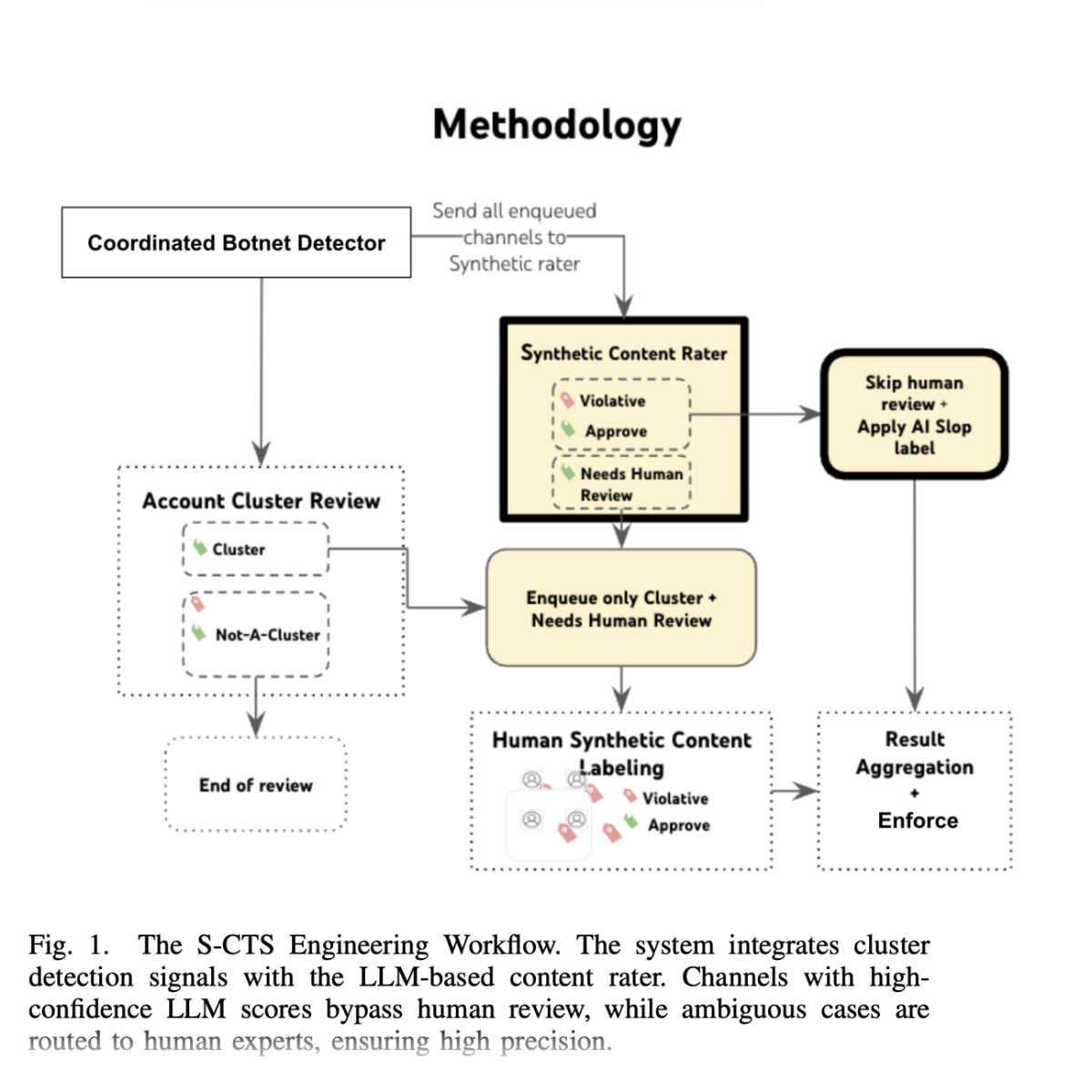
The paper isn’t about Google Search. It looks at coordinated spam on online video platforms, pointing to a familiar underlying idea.
Rather than judging a single piece of AI content in isolation, it explores ways to identify larger, orchestrated publishing patterns.
And that’s the part marketers should really pay attention to.
The Shift in How Google Detects Spam
Google isn’t moving the goalpost — it’s changing how it gets there.
Long before generative AI, Google was already rewarding helpful content and reducing volumes of low-quality pages created for the sole purpose of ranking.
That hasn’t changed.
An important distinction is that one person can now produce hundreds of pages in a fraction of the time it takes a writing team. While that’s great for productivity, it makes Google’s job of vetting search results much harder.
Here’s the deal: Google has spent the past few years talking more about scaled content abuse.
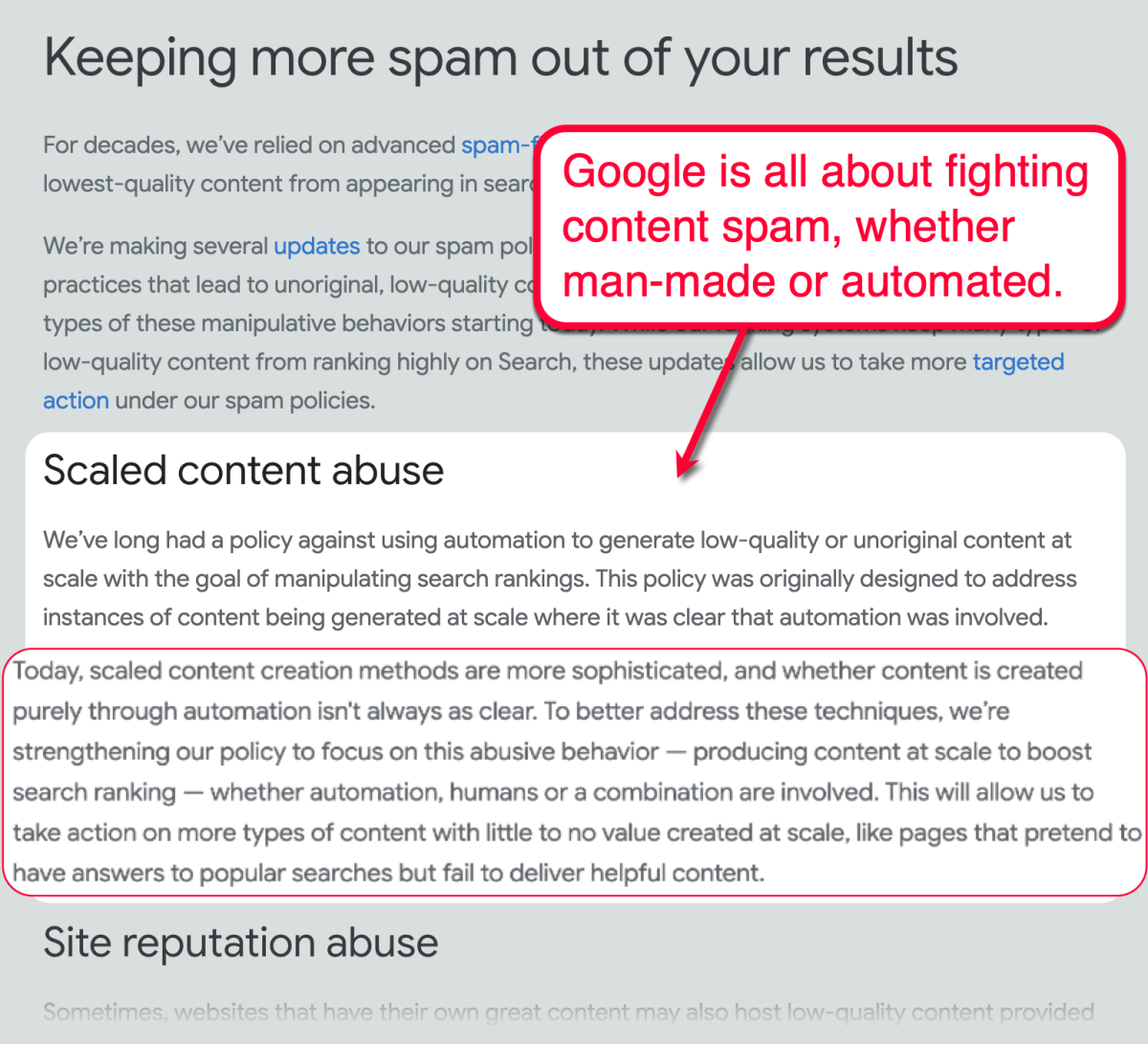
The issue isn’t whether AI created the content.
It’s whether content is being published at scale without offering anything new or genuinely useful.
The same idea runs through Google’s Helpful Content initiative. Instead of rewarding pages simply because they’re well-optimized for keywords, Google surfaces content that demonstrates real expertise, original ideas, and clear value for users.
That’s also why I think many discussions about “AI detection” miss the bigger picture.
Whether you write every word yourself, work with ghostwriters, or use AI, what matters is if the content helps readers learn something they couldn’t get anywhere else.
This is beyond just a single piece. It pertains to your entire content strategy as an ongoing publishing strategy.
What Google’s Latest AI Spam Research Actually Reveals
Google’s latest research introduces a system called S-CTS.
Instead of judging one article or video at a time, the system looks at groups of related accounts and the patterns they create together.
In other words, it isn’t just asking whether one piece of content looks suspicious. It’s asking whether a larger publishing network shows signs of coordinated behavior.
This is a brand new way of looking at spam.
And no, it’s not a new Google ranking algorithm update.
The paper focuses on coordinated, “spammy” publication of automated content across online video platforms. This underlying philosophy closely mirrors Google’s broader efforts to identify scaled, low-value content rather than isolated pieces of AI-generated articles.
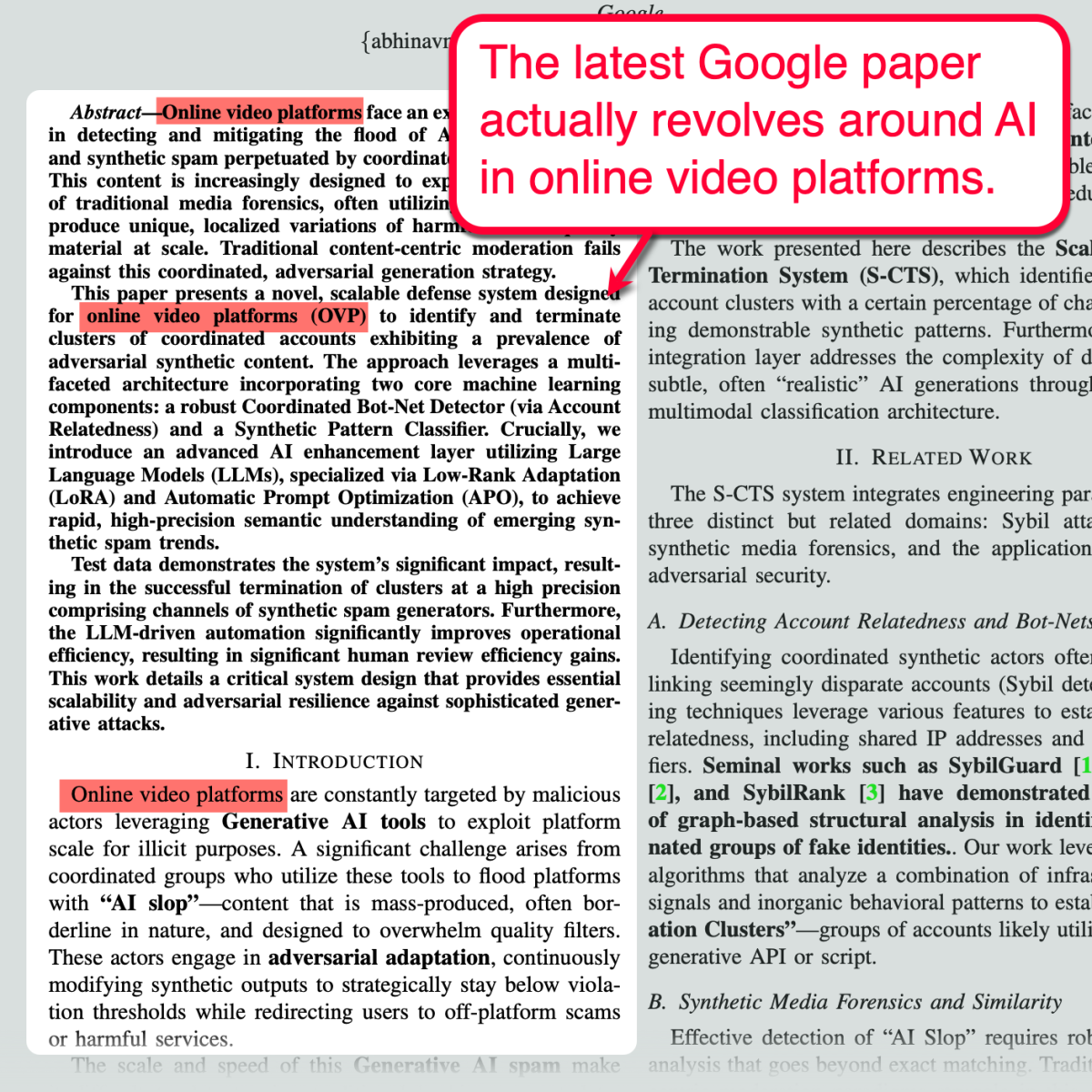
That said, I wouldn’t spend too much time thinking about the specifics of S-CTS.
The real question here is, if Google is getting better at recognizing publishing patterns, how will I tweak my own content strategy?
Why Pattern-Level Detection Changes Content Strategy
What does all of this mean for your content strategy?
For me, it comes down to one thing:
Publishing more content isn’t the same as creating more value. And that’s where I think Google’s latest research becomes relevant.
It hammers down on what Google has been saying for years: content becomes a problem when mass-produced without the people’s intentions and goals in mind.
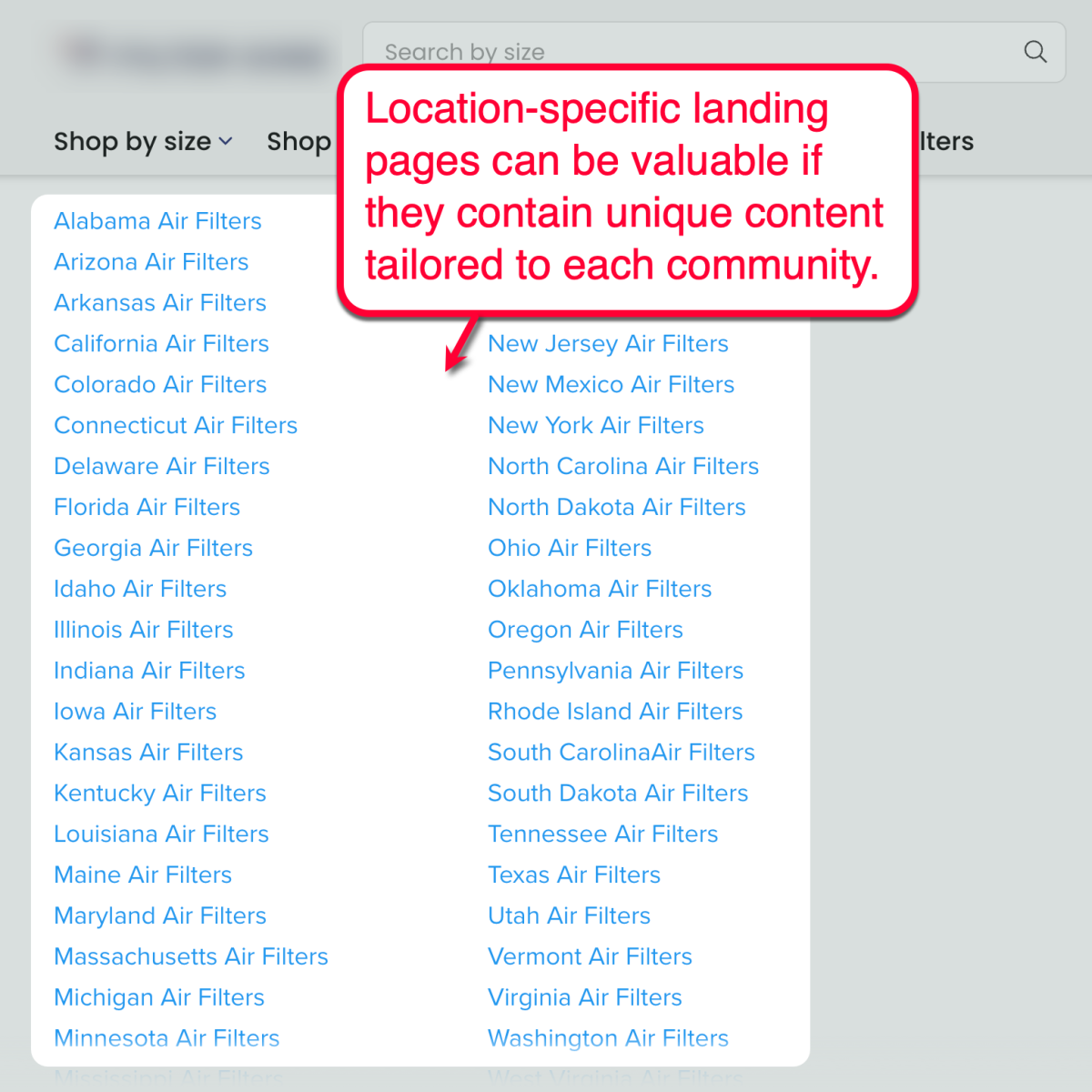
Take location pages.
While there’s nothing wrong with creating a page for every city or state you serve, each variation should bring something new to the table. Otherwise, you’re simply replicating the same information using the same template — the only differences are the location names and target keywords.
Other types of content sets exhibiting the same pattern are:
- Affiliate product roundups
- Product reviews
- Comparison articles
- “Top” listicles
- Service pages
- “What is” posts or glossary entries
Don’t get me wrong — these content types aren’t necessarily the problem. In fact, I’ve seen excellent websites build entire businesses around these formats, publishing hundreds of nearly identical pages because they could.
The format isn’t the issue.
The value is.
Ask yourself, if the page disappeared tomorrow, would visitors actually lose something worthwhile?
Remember, Google has consistently said that AI isn’t the problem. The bigger concern is using automation to mass-produce content that offers little beyond what’s already available.
What Defensible AI-Assisted Content Looks Like
Here’s what you need to do differently:
First of all, I wouldn’t stop using AI. In fact, I’d keep using it wherever it saves time.
The key difference would be in what happens after the first draft.
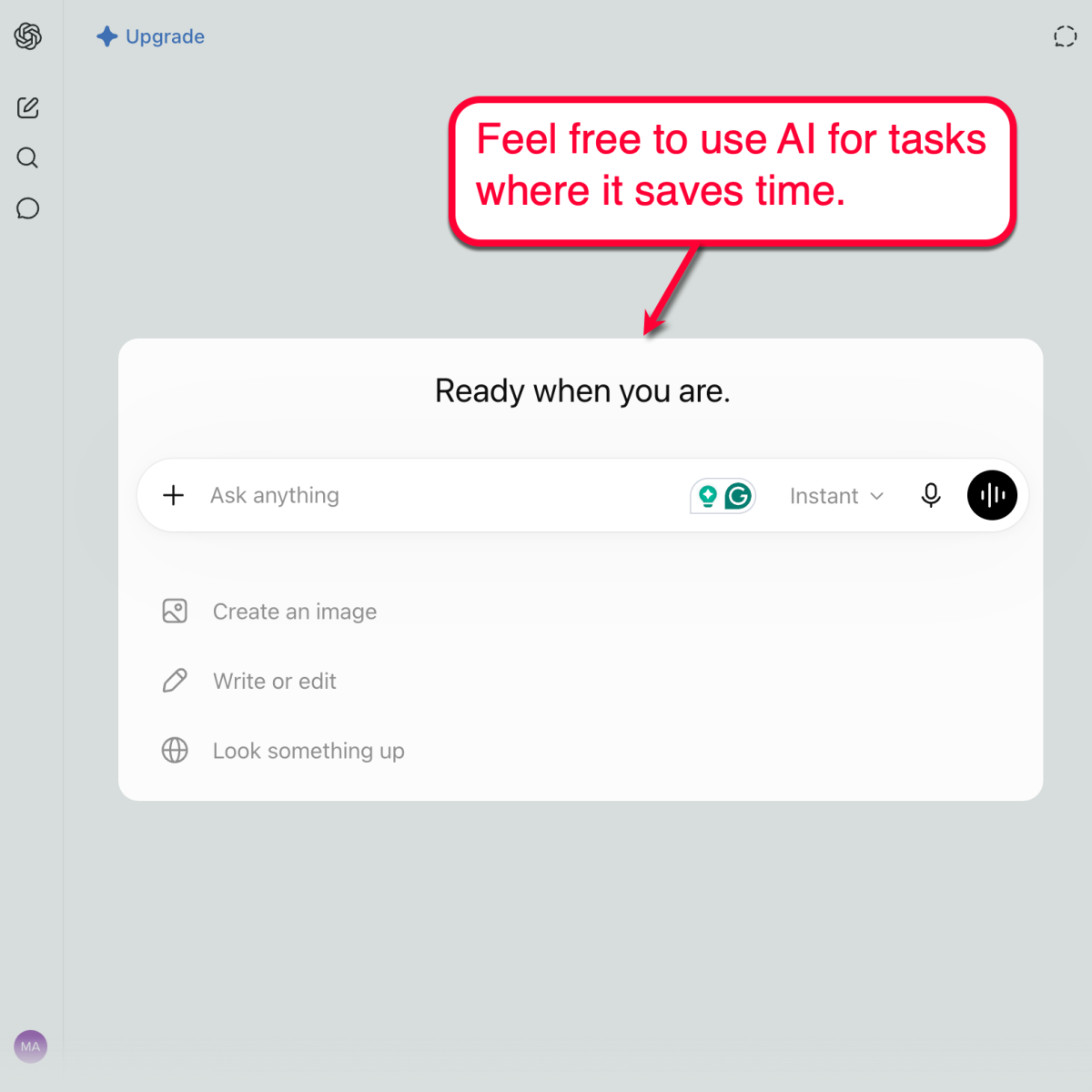
AI is great at helping organize ideas, refining messy notes, and polishing rough outlines. But when it comes to creating helpful content that ranks, the human factor is still more important.
You provide the experience, experiments, and customer insights that you’ve learned over the years. You also create screenshots, quotes, and whatever visuals you need (i.e., charts and tables) to convey information better.
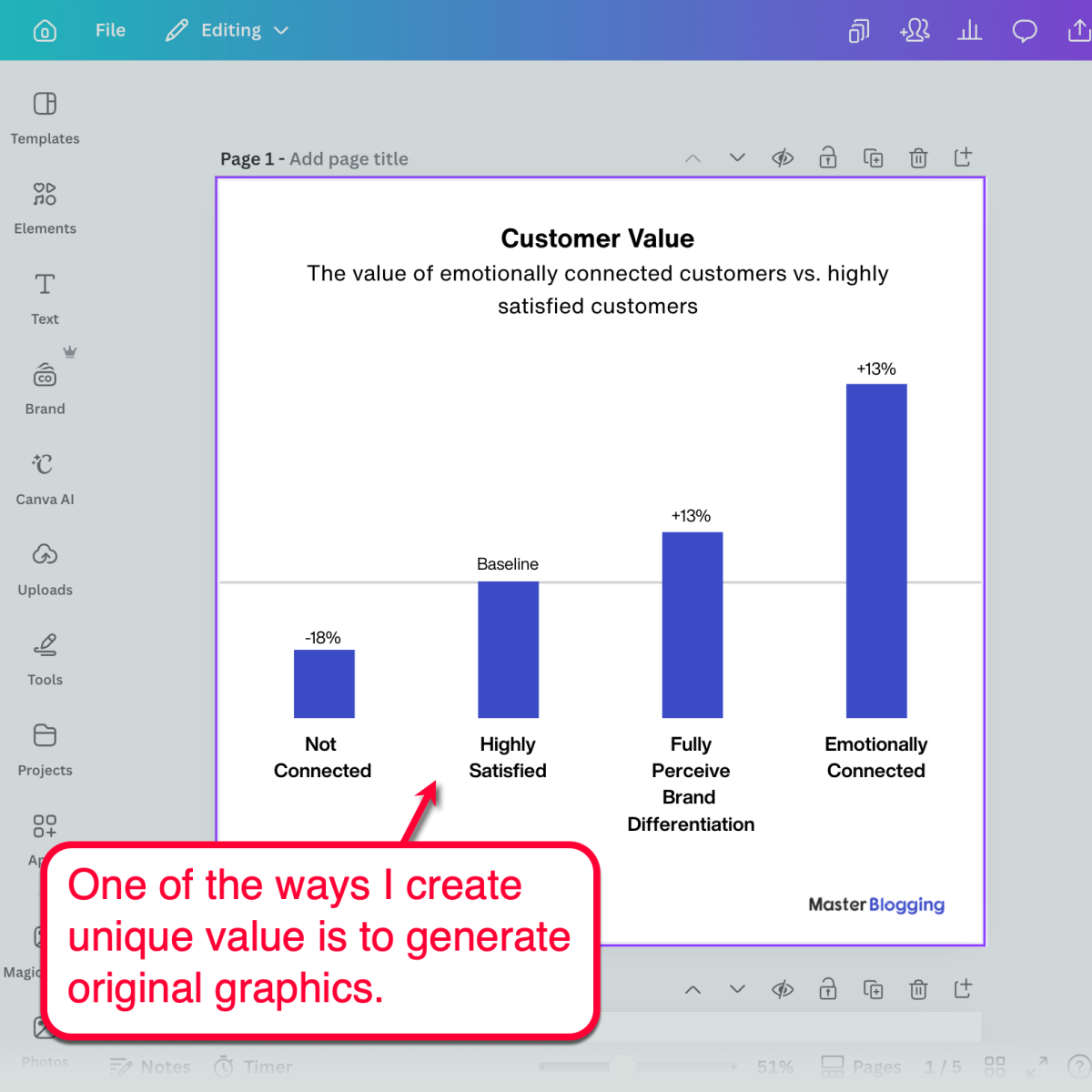
Let’s say you’re writing a software review.
Instead of rewriting the company’s feature list, create an account and use it yourself.
Explore the features, put them to action, and take screenshots to document your experience.
Write down what surprised you, mention where you got stuck, and share the benefits that exceeded your expectations.
I organize these thoughts in Notion, but you can use similar tools depending on your preference.
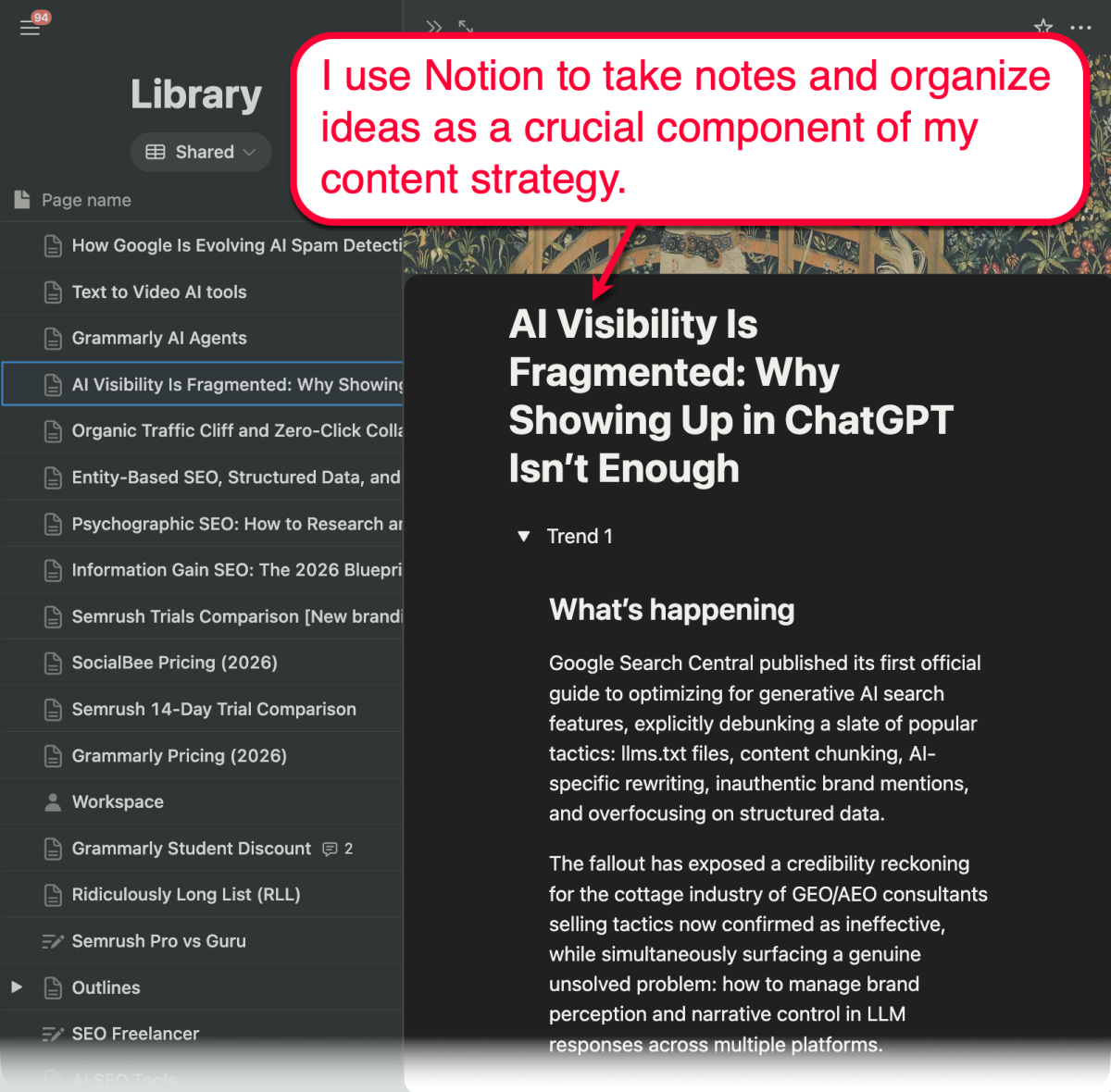
The idea is to share information that readers won’t get by exploring the website by themselves. That’s what they’ll remember — and that’s how you win their trust.
The same goes when you’re writing original research, interviews, case studies, or content frameworks you’ve developed over time. They don’t always have to be groundbreaking, but they should be made with your original input — not snapped into existence by AI using only prompts.
How to Audit Your Content Strategy
Understanding Google’s direction is one thing.
Knowing whether your own strategy is moving in the right direction is another.
That’s where data becomes useful.
I’ve seen a lot of bloggers and content creators tear down their entire content strategy as soon as traffic dips. They immediately blame Google’s latest update, AI stealing their traffic, or a potential penalty.
What you really need to do here is to stay calm and try to verify what exactly changed.
1. Verify Whether Your Visibility Has Changed
First things first, make sure your search presence actually tanked, and you’re not just looking at a blip.
It’s easy to mistake a minor ranking fluctuation for a total catastrophe. But with tools like Semrush One‘s Position Tracking, you can silence the noise and map out verifiable keyword trends and visibility shifts — as well as AI search visibility over time.
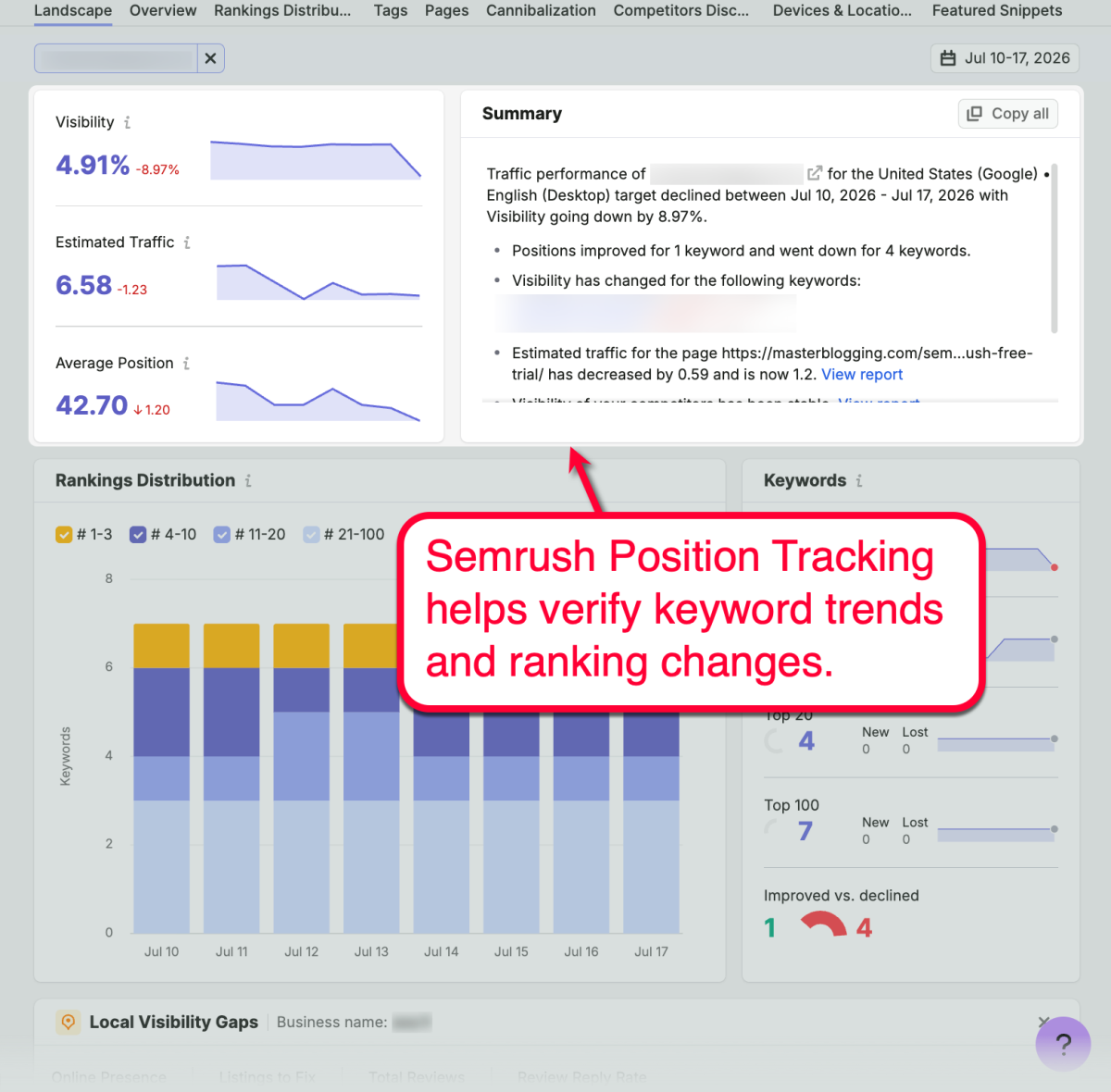
If your core metrics are holding steady, step far away from the panic button. Let the evidence do the talking before you rewrite a single line of copy.
2. Measure Your Visibility Beyond Google Search
Search isn’t the only traffic generation channel that matters anymore.
Nowadays, people are discovering brands inside AI Overviews, Gemini, ChatGPT, and other AI-powered search tools. That said, judging your success on rankings alone is a trap.
Use a tool like AI Visibility Overview from Semrush to track where your brand gets mentioned across AI conversations and search features.
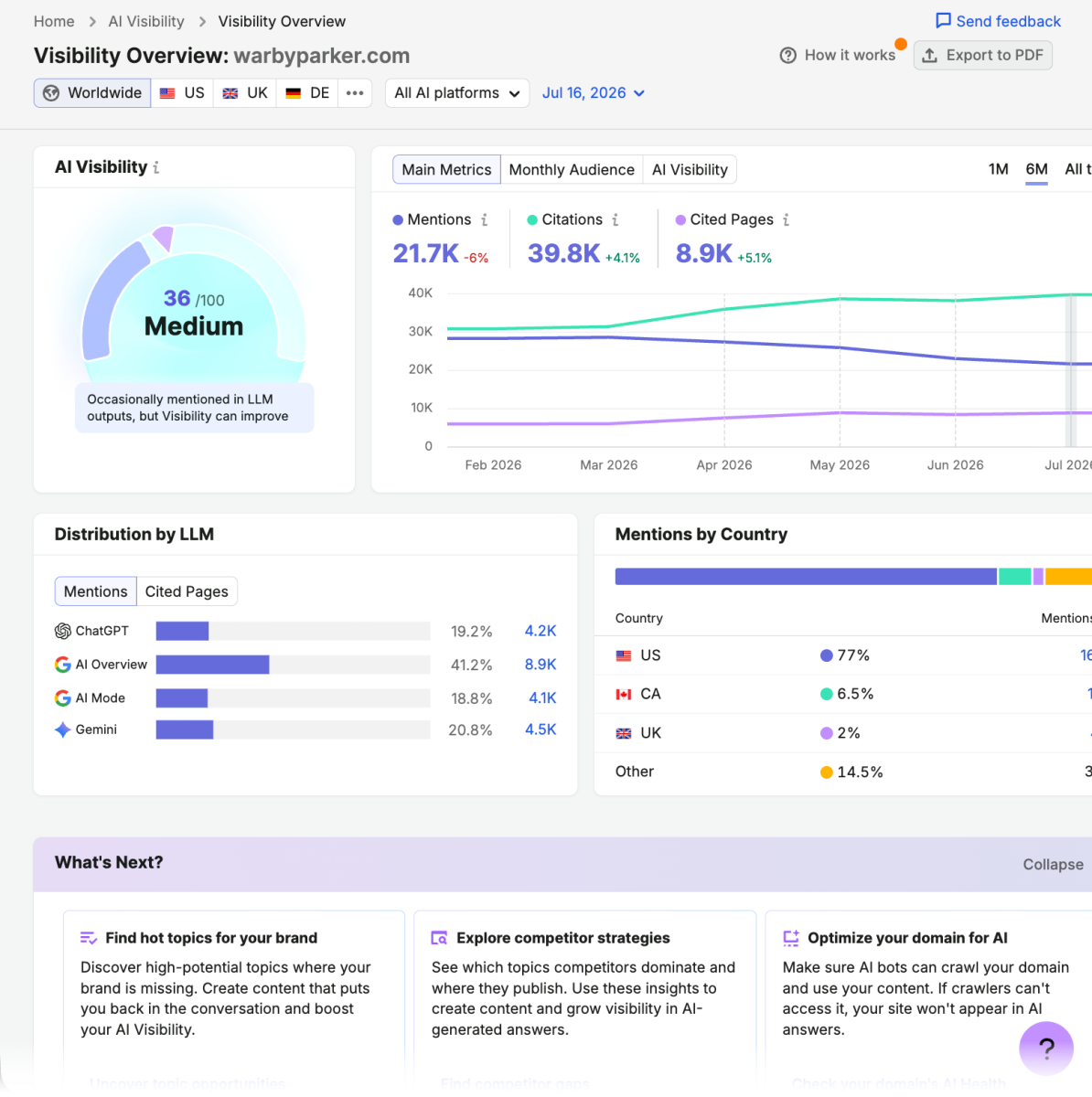
Apart from your AI visibility overview (e.g., total cited pages, mentions, and citations), Semrush also breaks down the topics where your brand is pulled. This includes potential topic opportunities and data sources that can help position your brand to the right users.
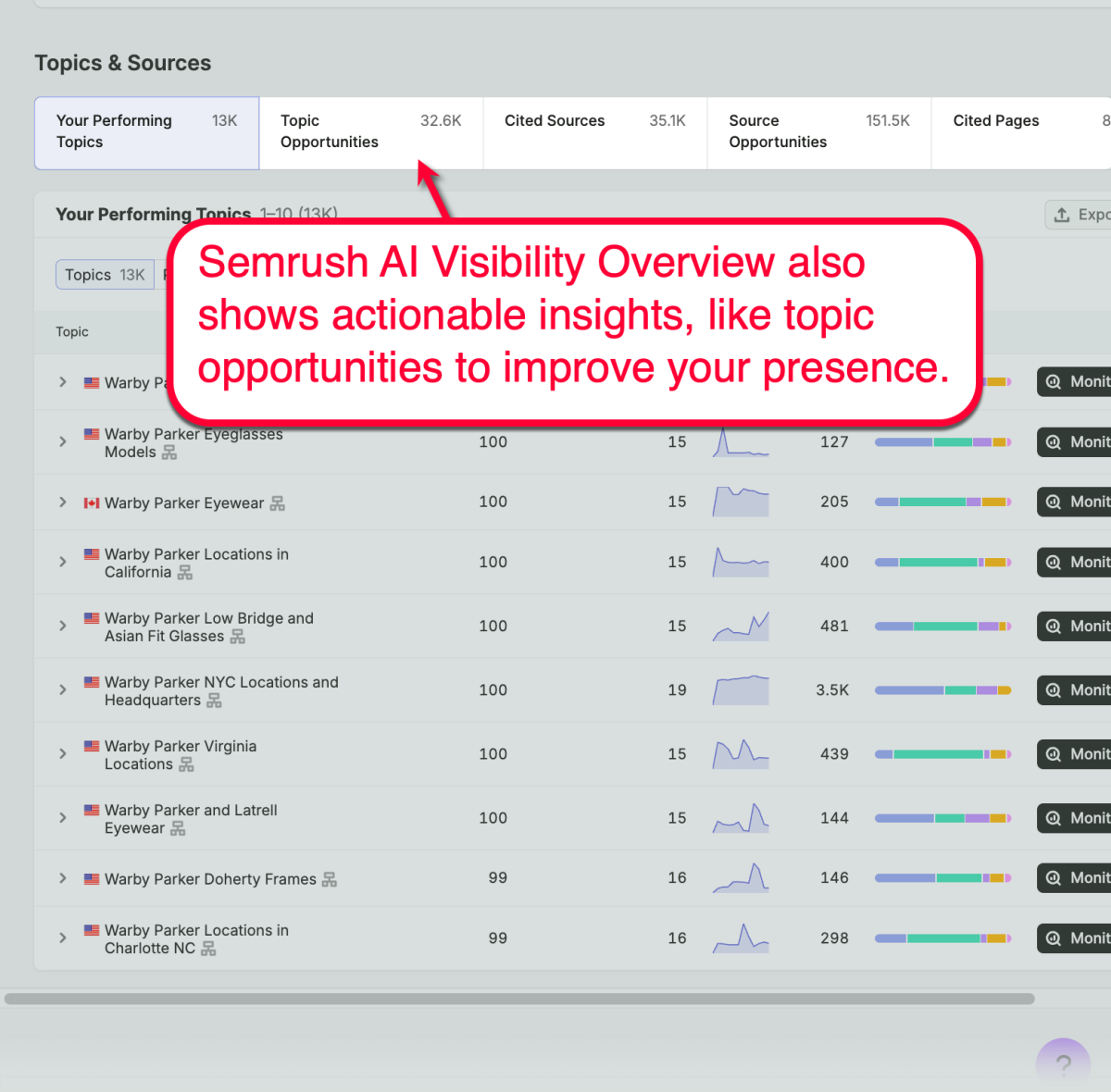
This, in combination with Semrush’s generic SEO reporting, gives you a much truer and modern picture of your digital footprint.
3. Learn From Competitors
A drop in traffic doesn’t always mean your content went bad — or that Google suddenly decides it’s time for a penalty.
Sometimes, a competitor just built something better.
That said, always look at who’s winning before you assume that Google changed the rules of the game. By using competitor analysis and prompt research tools, you can keep tabs on who’s gaining ground, which topics they’re dominating, and how AI platforms are sourcing their answers.
This is another thing Semrush One does so well. Whether you’re checking your AI Visibility or finding profitable keyword ideas, you have competitor analysis functionality baked right in.
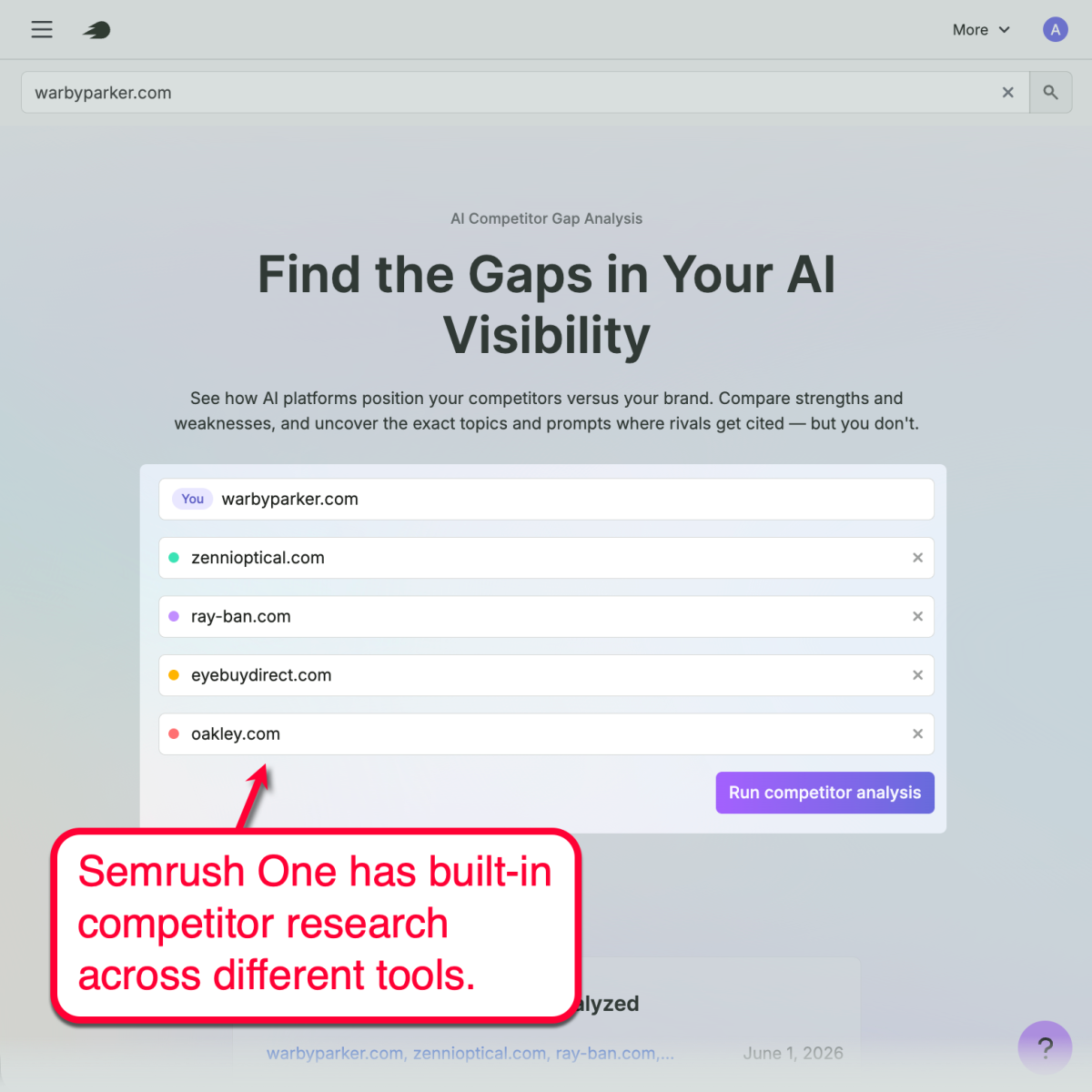
Obtaining context around rankings changes beats guessing every single time.
If you use Semrush as I do, just remember to explore features — like the Prompt Research tool — that utilize competitor data to present insights.

Prompt Research reveals the topics, questions, and other opportunities to build your brand’s presence in AI search. This covers platforms like ChatGPT, AI Overviews on Google, Perplexity, and Gemini.
4. Separate Website Problems From Market Changes
Looking only at your analytics can be misleading.
Remember, not every traffic slump is caused by SEO or AEO failure. Whatever you do on your website, it doesn’t affect how search demand, industries, and the competition evolve over time.
What you need is a proven system for separating internal website issues from broader, industry-wide trends.
For example, on Semrush One, I can fire up the Traffic & Market Toolkit for a broad view of industry-level traffic data. Right off the bat, I can easily identify whether external factors like seasonality and competitor activity are skewing my own website’s performance.
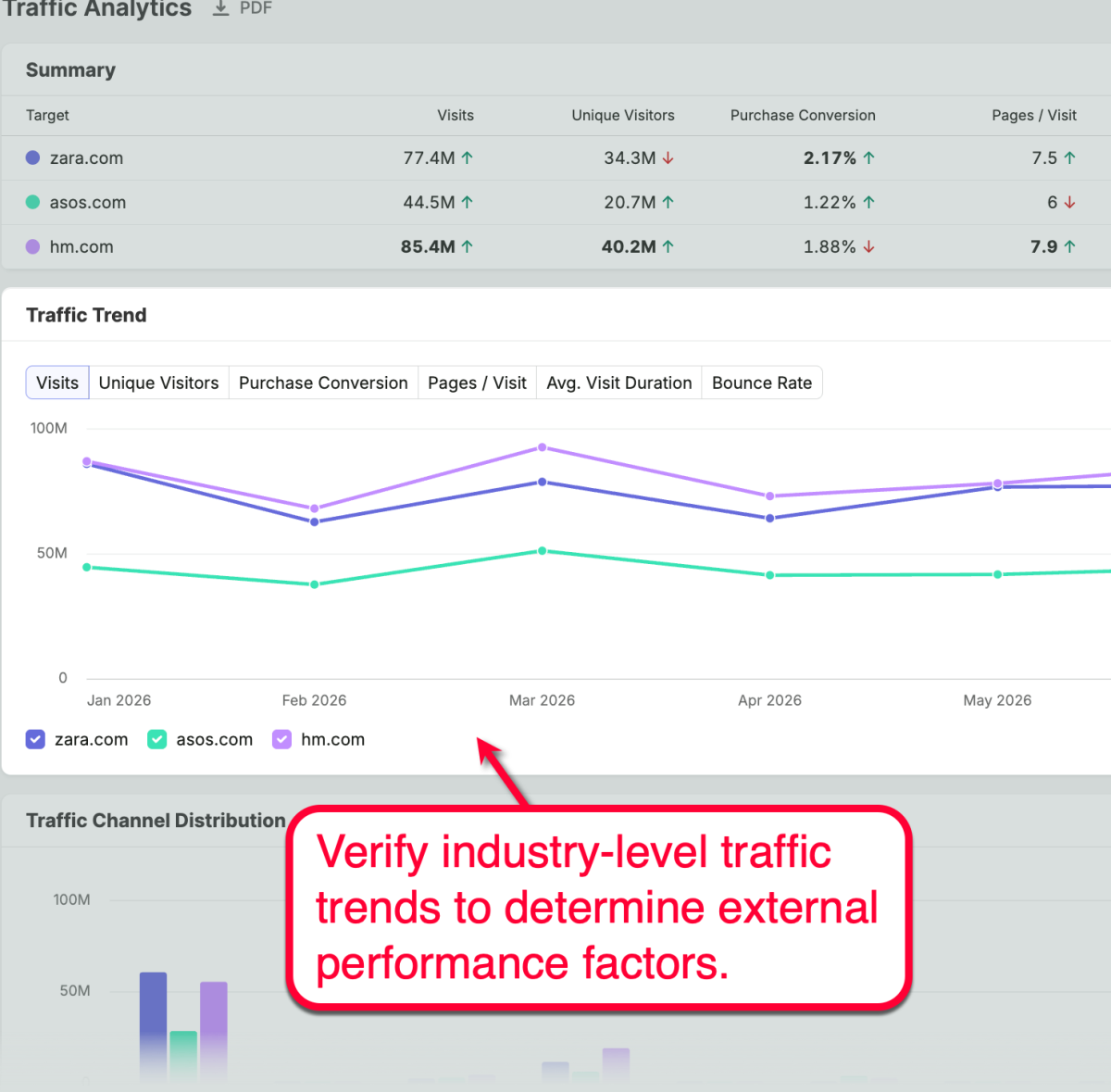
If you find out that the market as a whole is stable but your website traffic is declining, that’s when you need to look inward. Do a double take on recent website changes, reviews, social media interactions, and technical issues that may have influenced your marketing.
5. Improve Content Before You Publish
Optimization should be a natural part of the entire content pipeline — not just in post-publishing.
Remember, the easiest piece of content to optimize is the draft sitting in your Google Docs.
Before you go live, make sure your piece is sharp, comprehensive, and genuinely helpful to human readers. Move away from pieces that are created solely to appeal to search engine crawlers.
That’s why I use the Semrush One Content Toolkit. The Content Optimizer tool not only provides real-time AI and SEO improvements, it also integrates seamlessly with two very important tools in my workflow: WordPress and Google Docs.
Best of all, the Content Toolkit allows me to polish the copy early.
While it does have a generative AI component for quick drafts, I never let it take the lead. It does an excellent job of refining, structuring, and fixing any gaps in my writing before the world sees it.
This way, the piece retains originality and entity clarity while optimizations for readability and keywords are automated.
6. Eliminate Technical Barriers
Even world-class content will flop if search crawlers can’t access it.
That’s why technical SEO remains important. It identifies whether your site unintentionally blocked AI and organic search crawlers, has structural problems like orphaned pages, or has other technical SEO issues like broken internal links.
Sounds overwhelming?
A quick site audit ought to clear everything up.
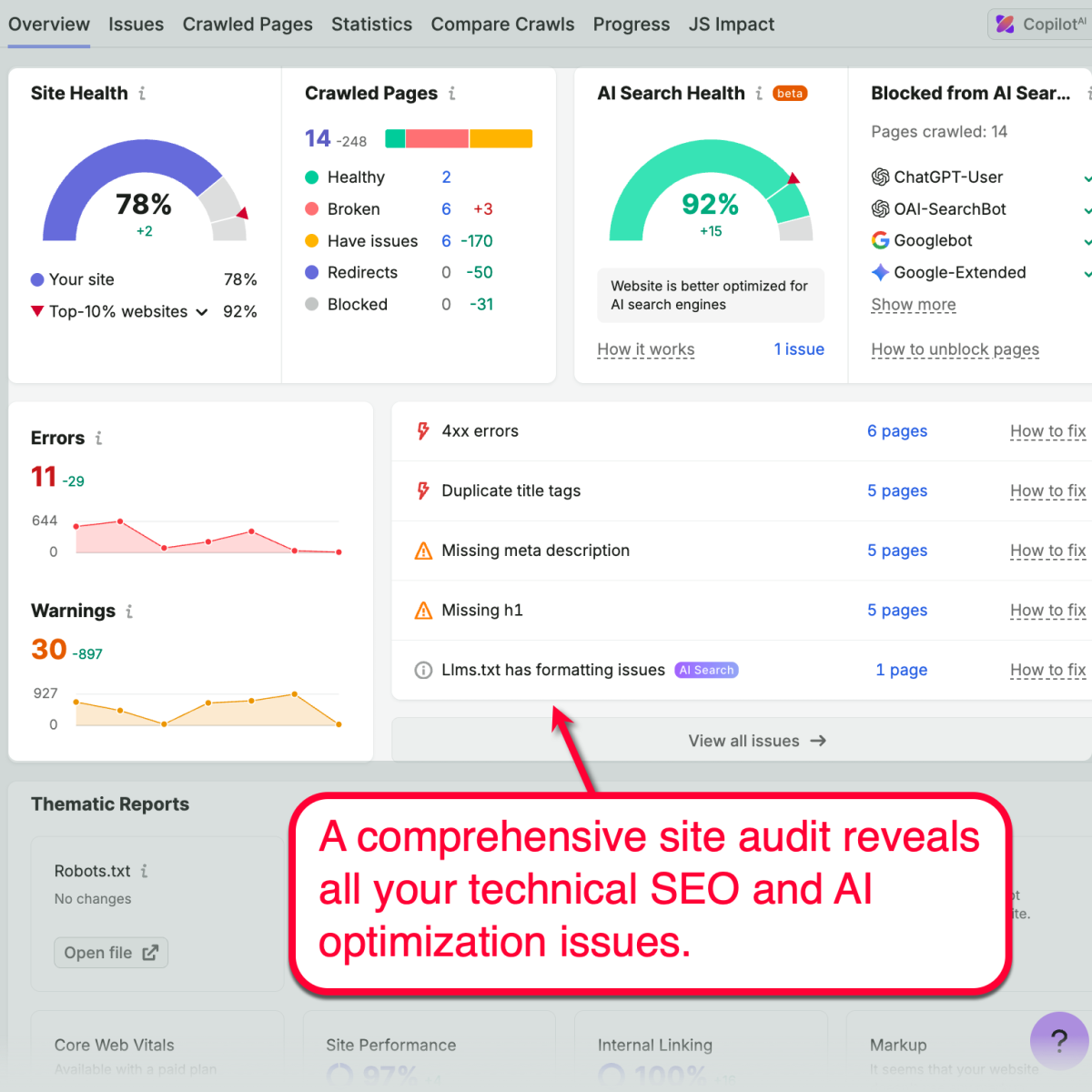
Using the Site Audit tool from Semrush One, get a quick view of your website’s SEO and AI Search health.
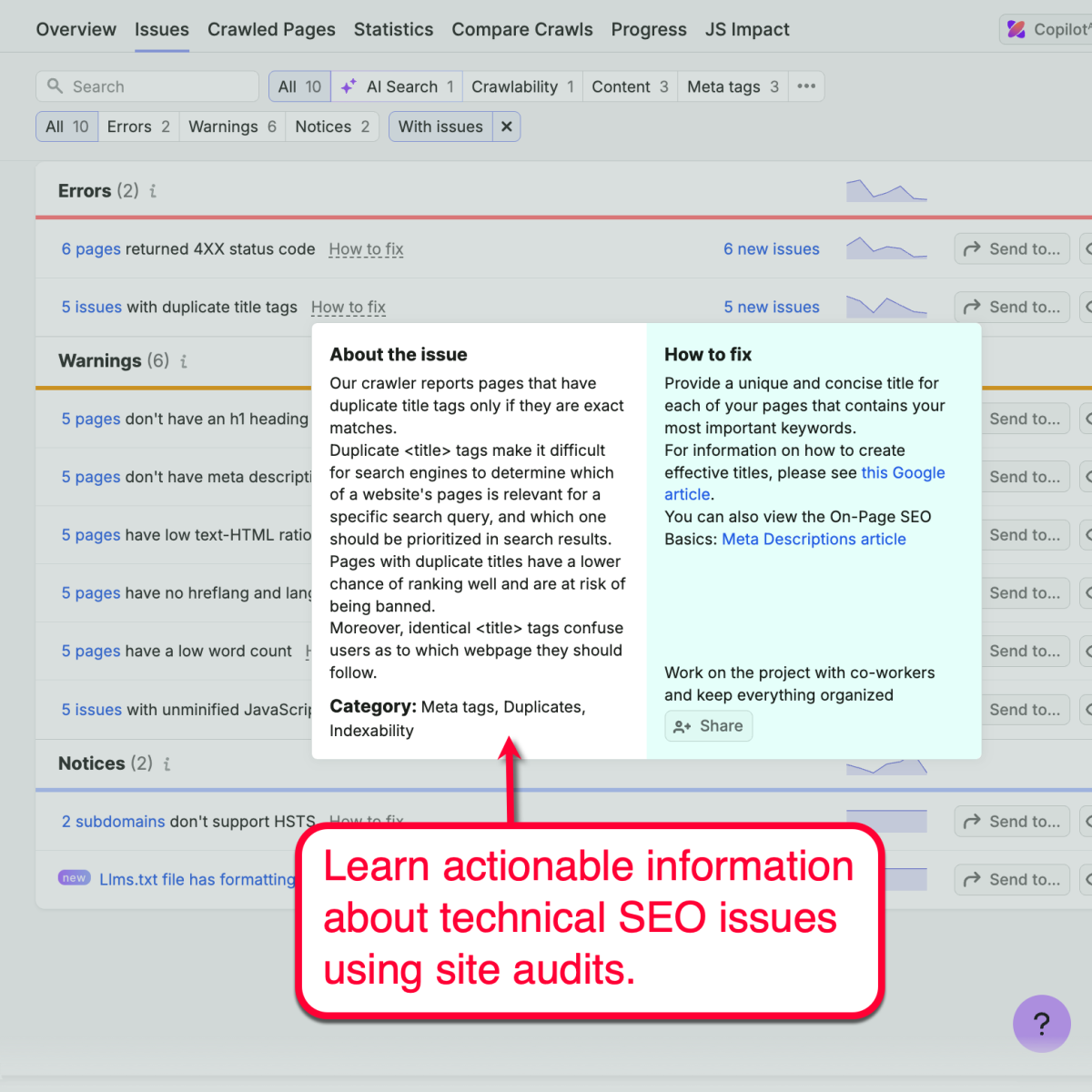
Semrush One also lets you dig deeper into specific issues and potential improvements. Just click ‘How to fix’ to gain more information and recommendations.
The bottom line: Don’t make moves based on a gut feeling or panic. Map out what’s actually happening first, and let the data dictate your next move.
The Future of AI Spam Detection
Google’s systems will keep changing.
New research papers will be published. New detection methods will emerge.
More importantly, today’s AI models will eventually be replaced.
But whatever happens, Google’s core principle is to reward content that genuinely helps people while fighting against manipulative tactics.
Again, it doesn’t really matter if the content is written by AI or humans.
Don’t build your strategy around avoiding AI detection.
Instead, focus on a publishing strategy built around irreplaceable content — assets with real value that readers can’t find anywhere else.

Article by
Ankit Singla is the founder of Master Blogging. With over 15 years of blogging experience, he helps entrepreneurs build blogs that become long-term business assets through content, SEO, and authority.
